A SIMPLE START TO EARLY READING
How to Teach Letter Sounds Without Feeling Overwhelmed
Learning the alphabet is only the beginning. This parent-friendly guide walks you through a playful reading journey—from first letter exposure to phonics, sound blending and early reading fluency.
Free printable · Play-based practice · Flexible guidance for ages 2–6
I knew the alphabet—but I still did not know how to teach reading
When I first started helping Sofia learn her letters, I assumed I could simply point to each one and say its sound.
Then I reached letters like A, C and G and realized how quickly phonics becomes confusing for a parent who was never taught how to teach it. Which sound comes first? Should I say the letter name too? When do we begin blending sounds into words?
I did not want reading practice to feel like a lesson she had to sit through. I wanted it to feel like the rest of our learning—short, playful and connected to things she already enjoyed.
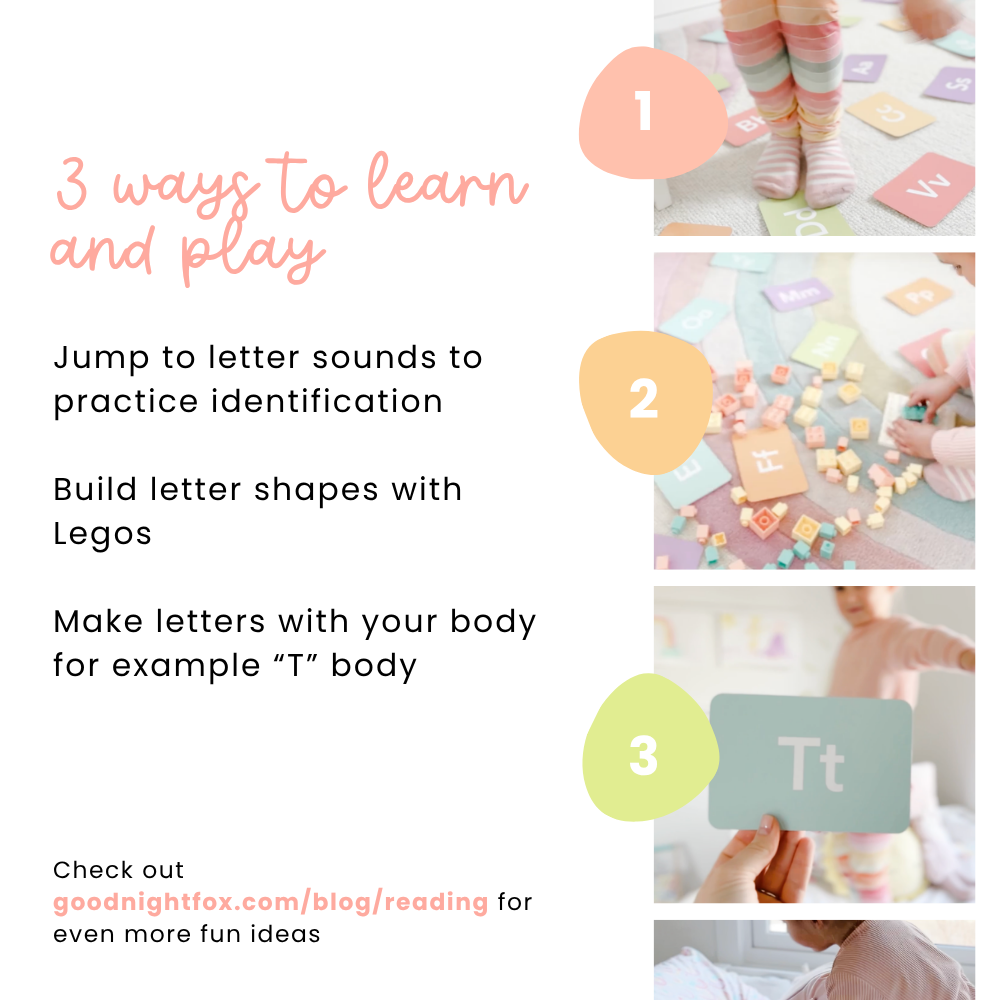
So I created a simple reference sheet for myself and began practicing one letter sound at a time. We jumped to letters on the floor, built letter shapes, searched for sounds in books and hid cards inside sensory bins.
That small shift made phonics feel manageable for both of us. This guide is designed to give you the same clear starting point.
FREE PARENT REFERENCE
Keep Every Letter Sound Within Reach
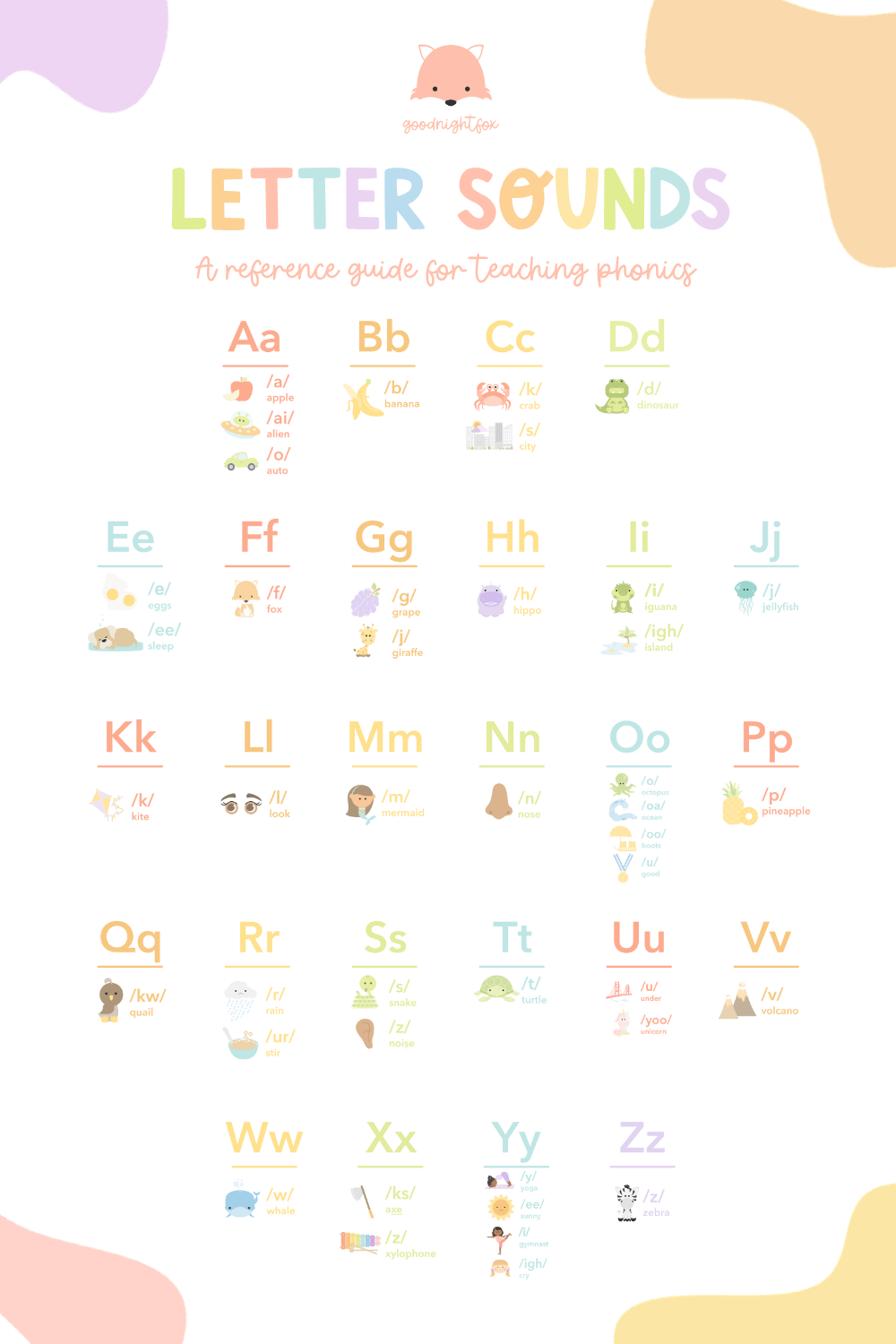
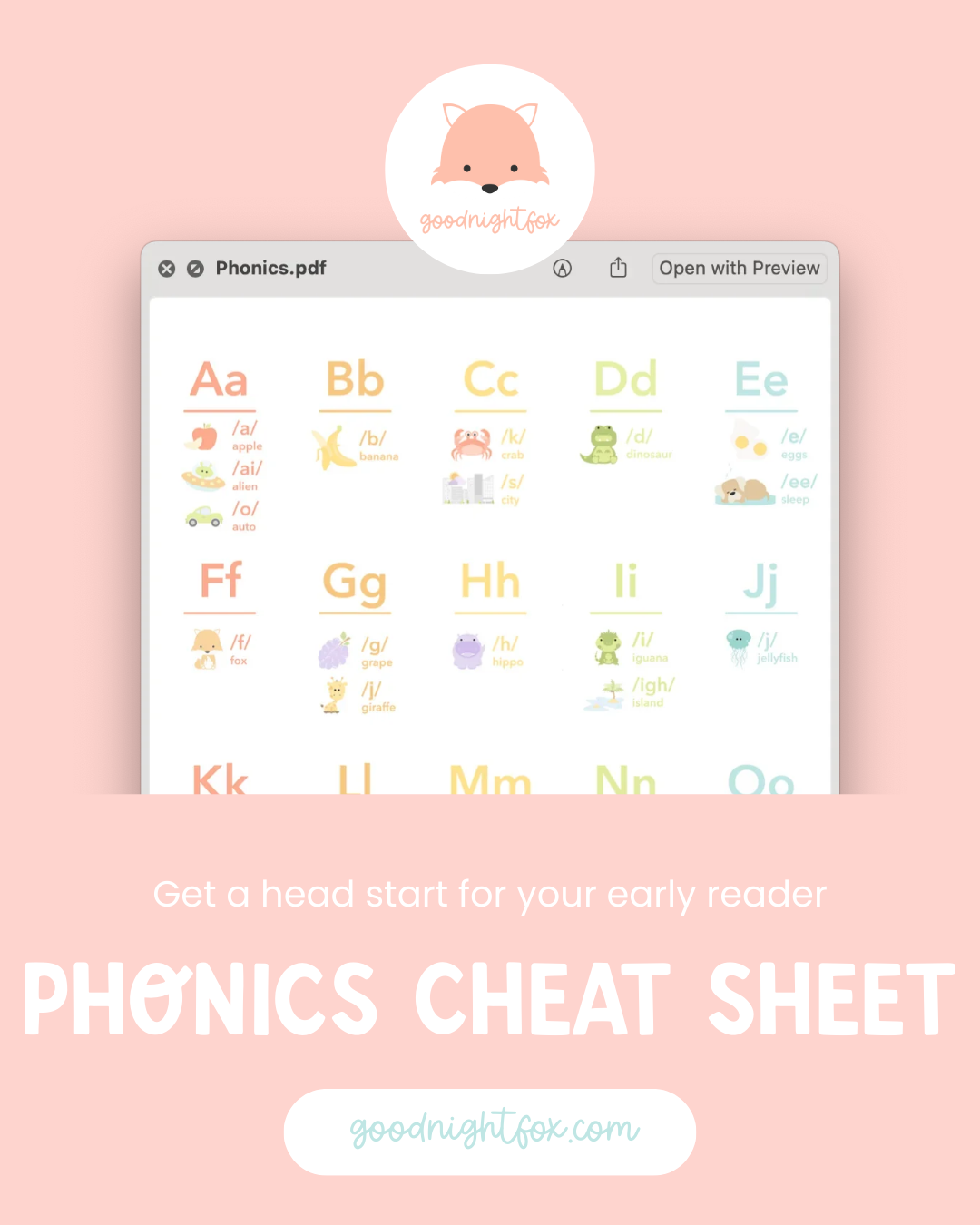
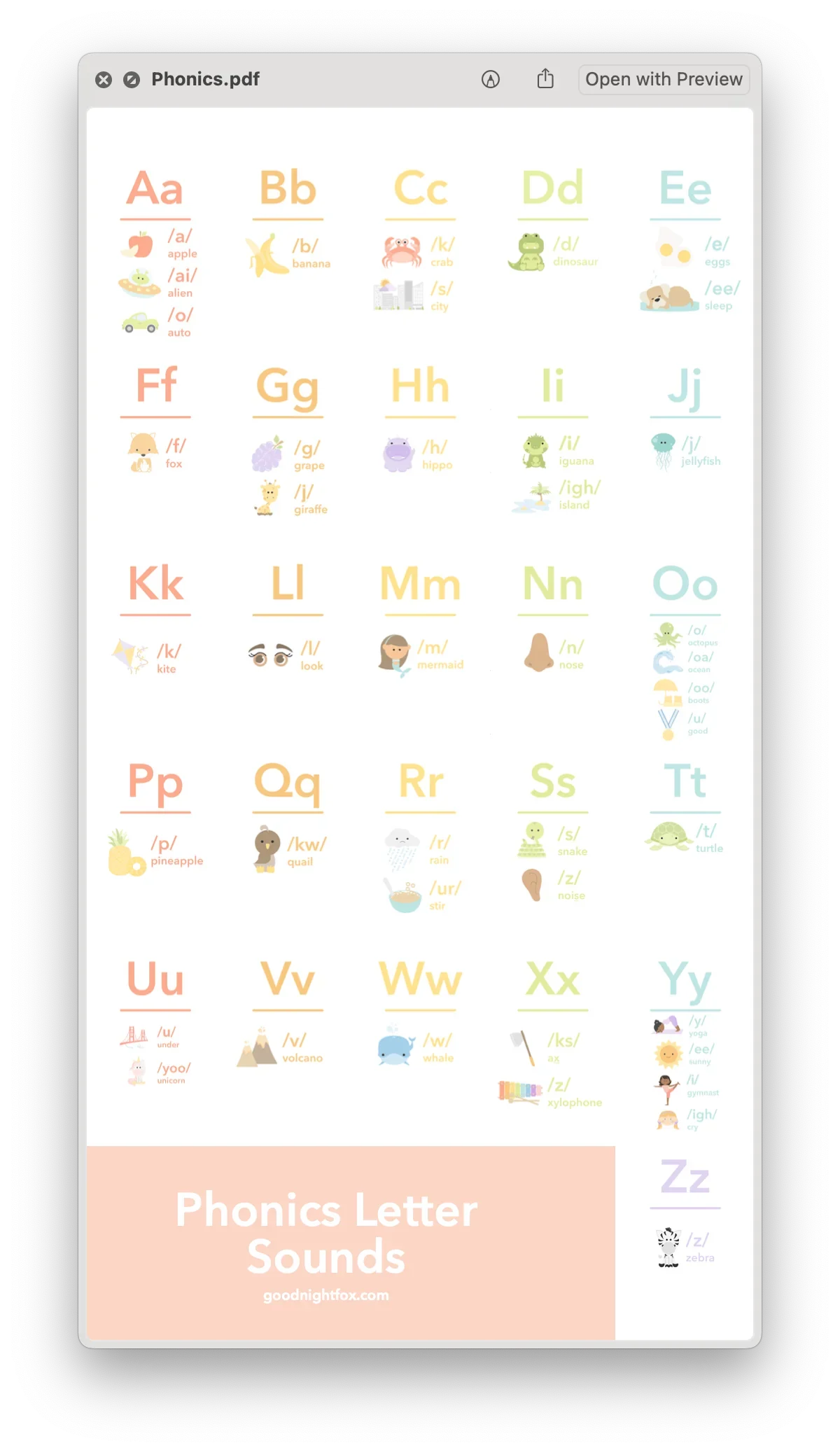
The free GoodnightFox Phonics Cheat Sheet gives you a clear visual reference for the most useful sound to introduce first, plus additional sounds children may encounter later.
- Reference for all 26 letters
- Primary letter sounds
- Secondary sounds parents often forget
- Easy visual cues
- Perfect for a fridge or learning binder
You will also receive playful early-literacy ideas and occasional GoodnightFox product updates. Unsubscribe anytime.
WHY PHONICS MATTERS
Phonics Connects Spoken Language With Print
Phonics helps children understand that written letters and letter combinations represent sounds in spoken words.
As children strengthen this connection, they become better able to hear beginning sounds, blend simple words and attempt unfamiliar words instead of relying only on memorization.
WHY THIS FEELS HARD
Letters Do Not Always Make Just One Sound
Parents are often told to “teach the letter sounds” without being shown which sound to introduce first or how much information a young child actually needs.
You do not need to teach every possible sound at once. Begin with one common, easy-to-hear sound and introduce variations naturally as your child encounters them in books and conversation.
THE GOODNIGHTFOX READING SYSTEM
A Clear Path From First Letters to First Words
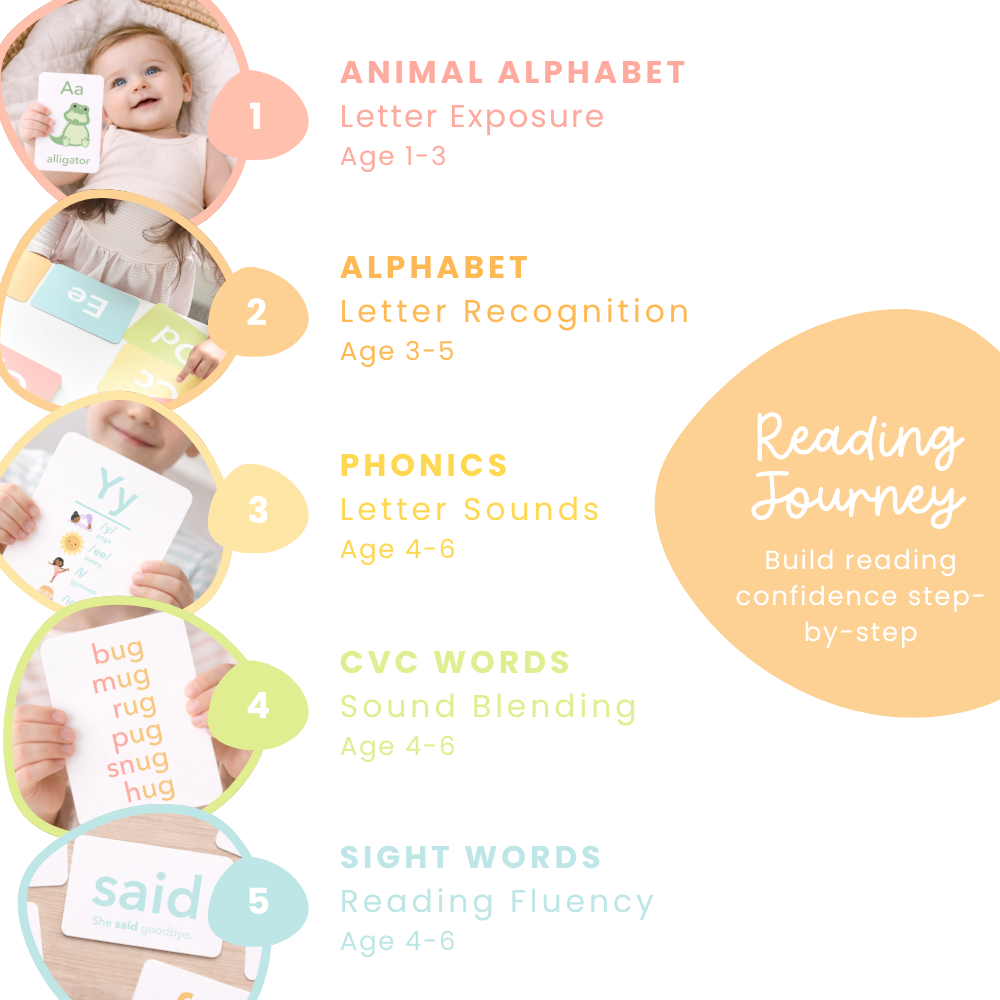
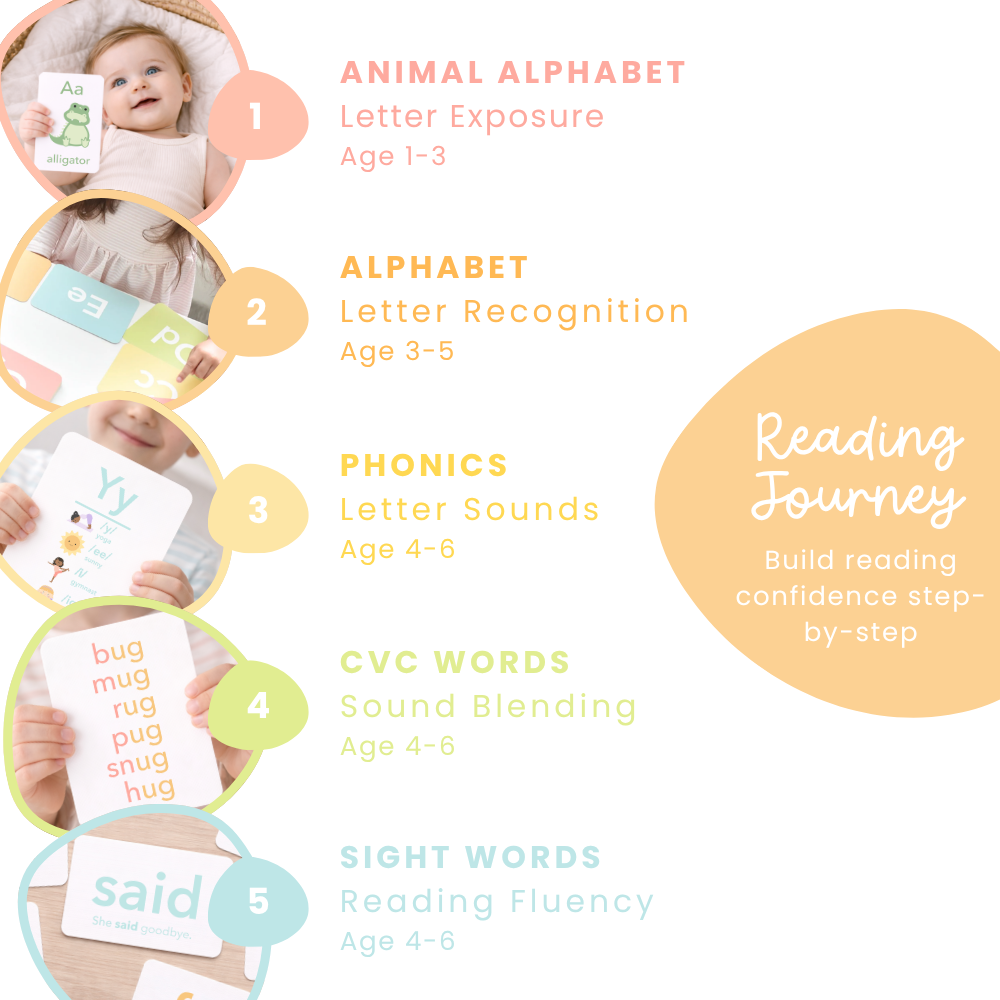
Children do not move from seeing the alphabet to independently reading books in one leap. Reading develops through connected stages: letter exposure, recognition, phonics, sound blending and increasingly fluent word reading.
The GoodnightFox Reading Journey helps you identify the stage your child is currently exploring and choose a playful next step.
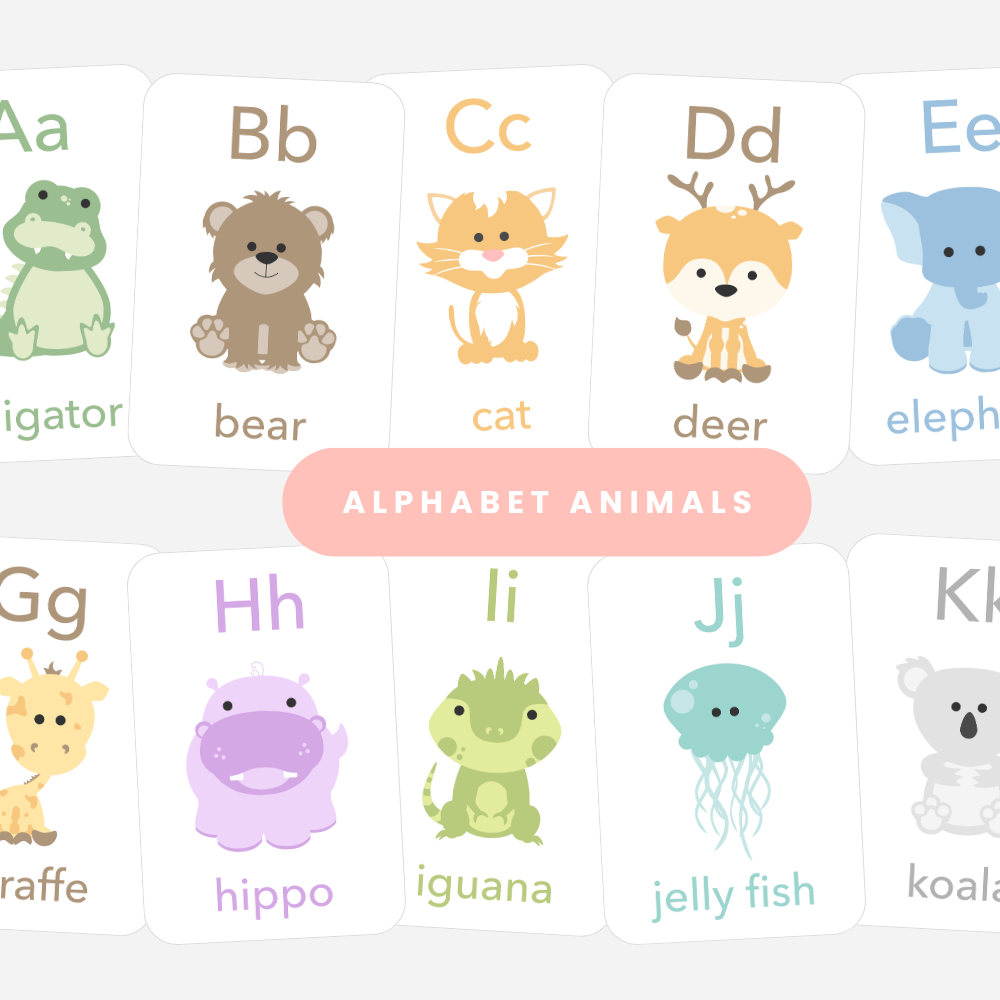
ANIMAL ALPHABET
Letter Exposure
Approximately ages 1–3
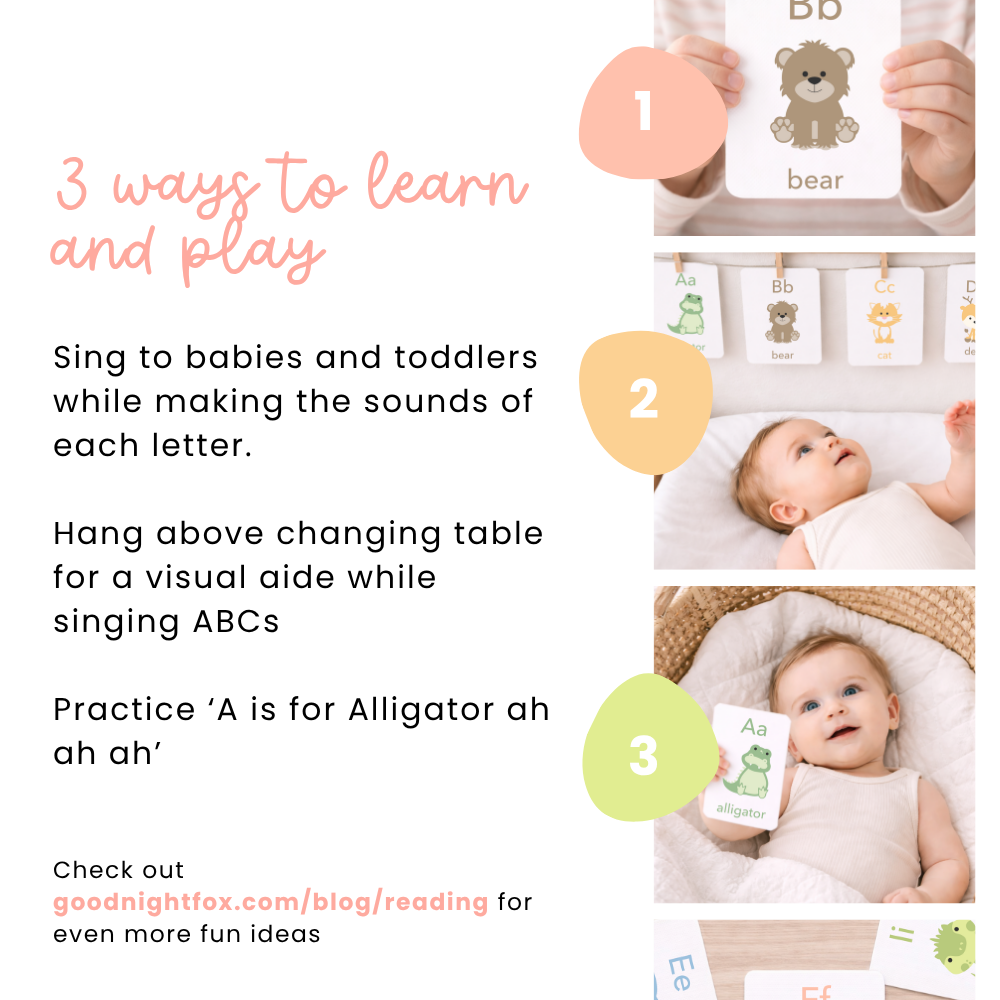
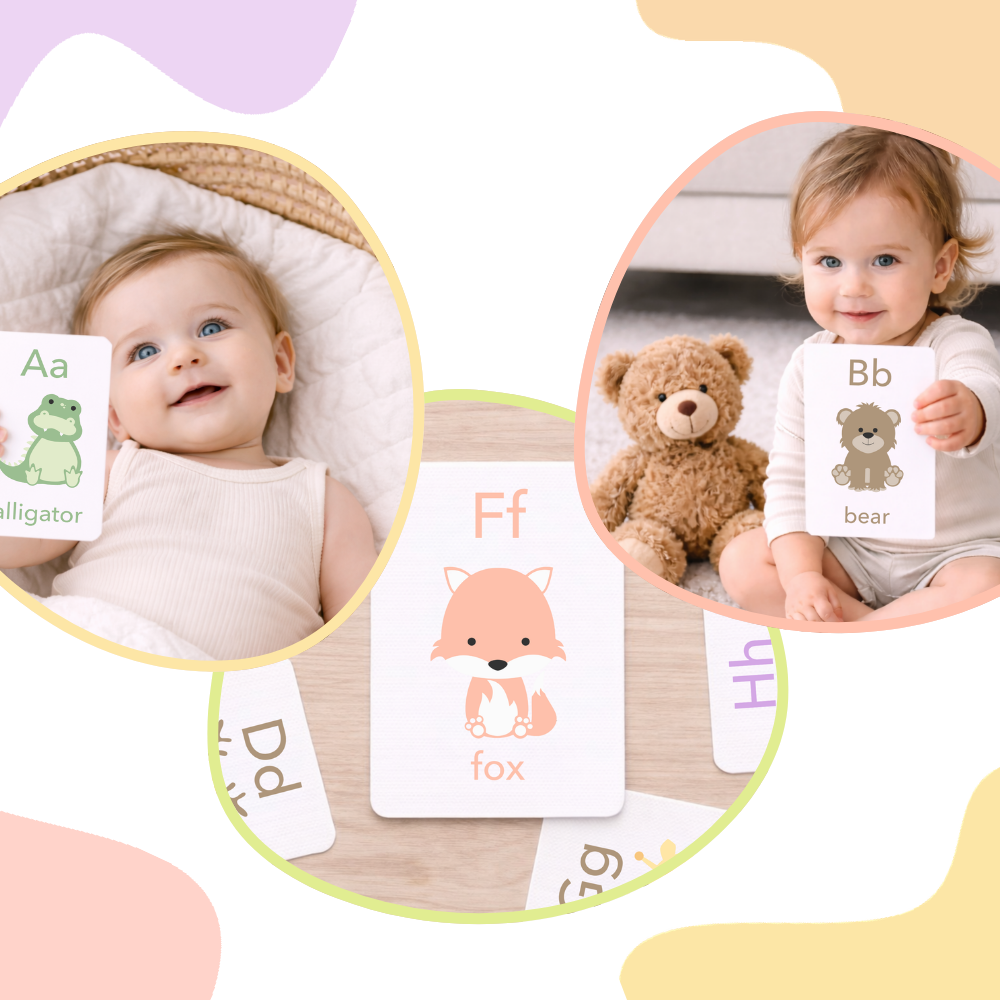
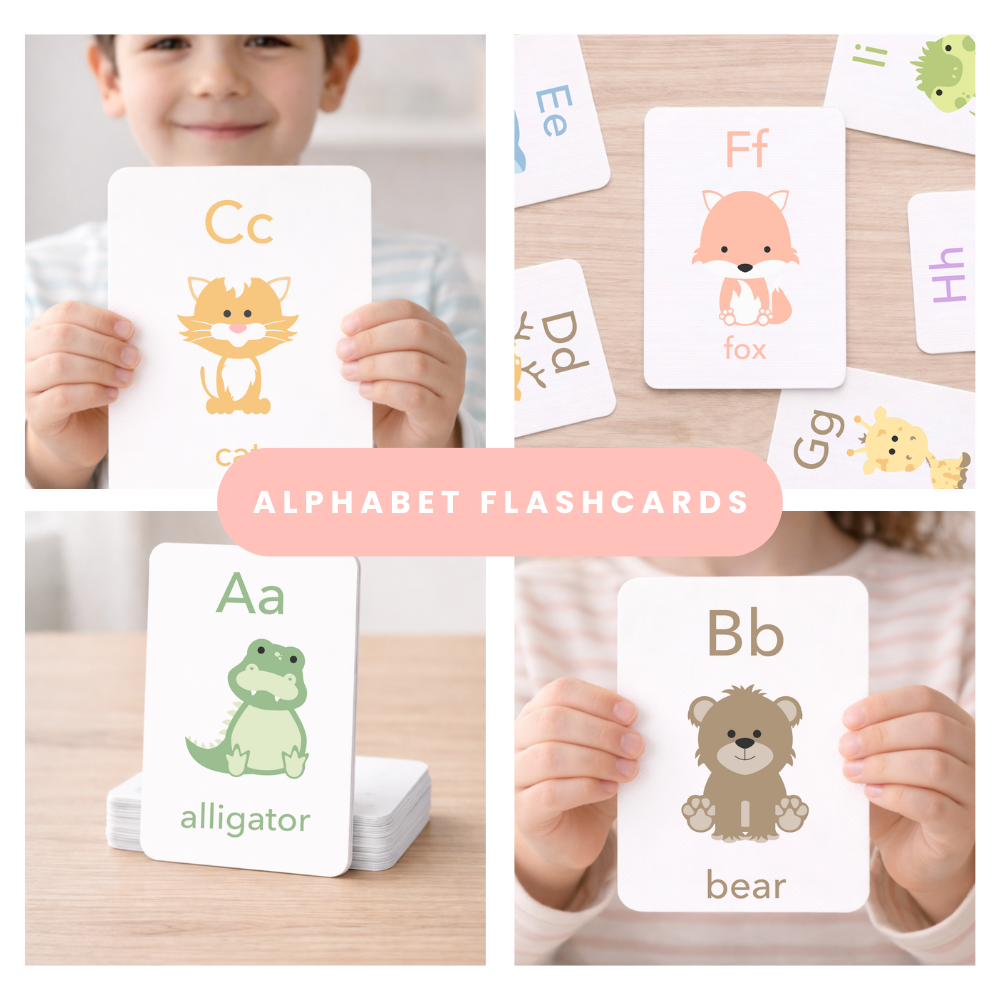
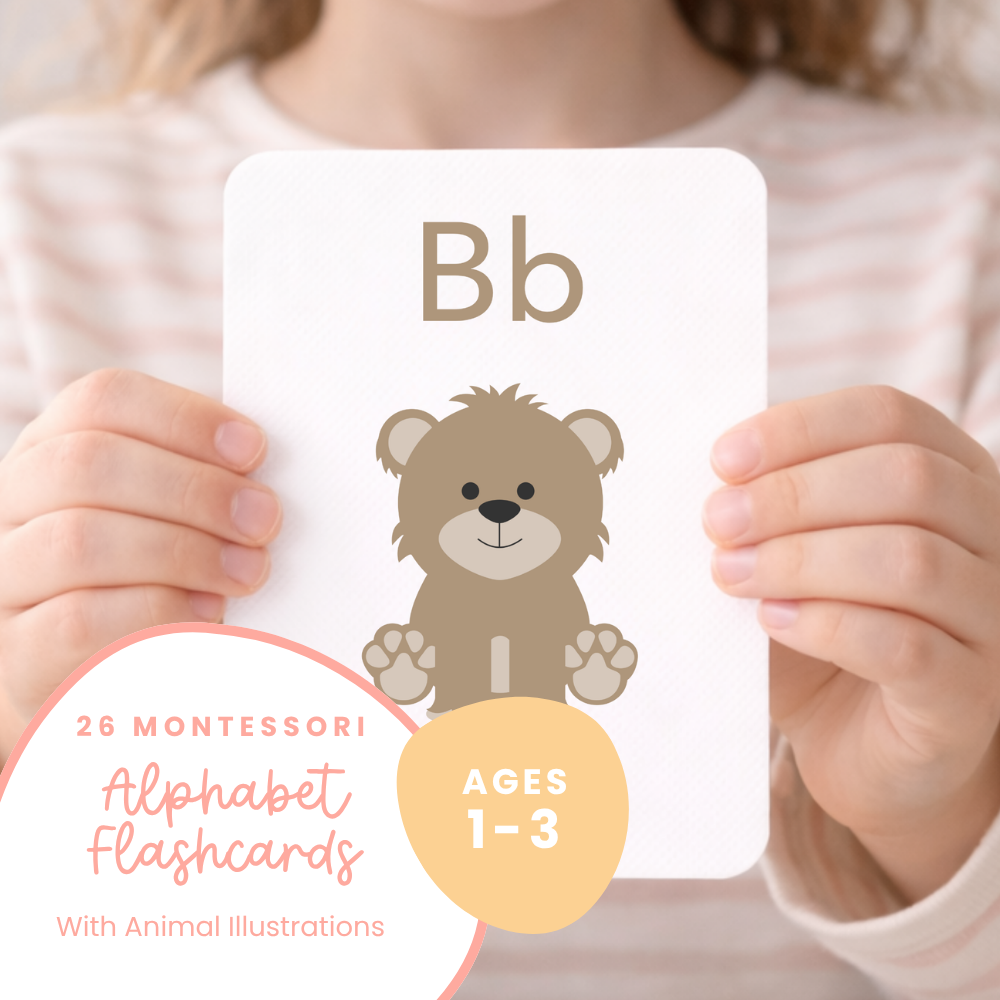
Children begin noticing letters through memorable animal illustrations, familiar words and playful visual associations.
Explore Animal Alphabet Cards →ALPHABET
Letter Recognition
Approximately ages 3–5
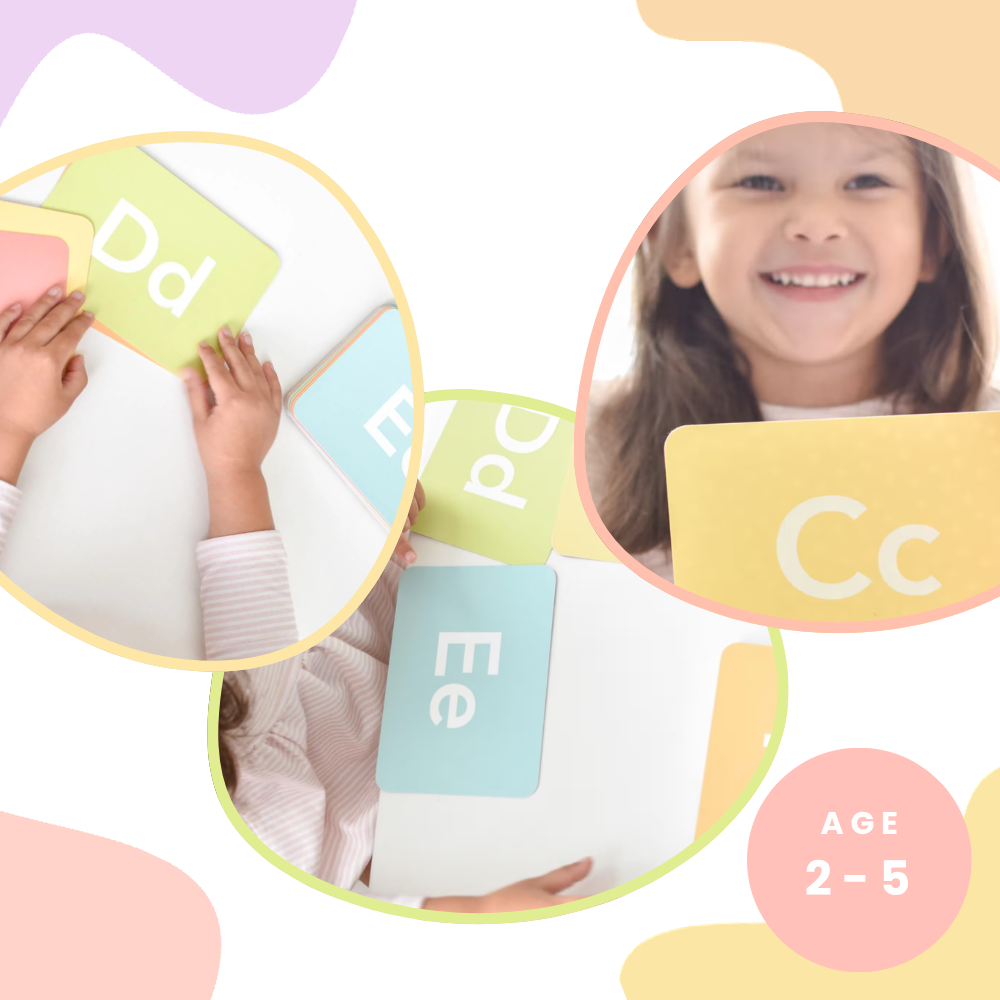
Children learn to recognize, name and match uppercase and lowercase letters.
Explore Alphabet Flashcards →PHONICS
Letter Sounds
Approximately ages 4–6
Children connect printed letters with their most common spoken sounds.
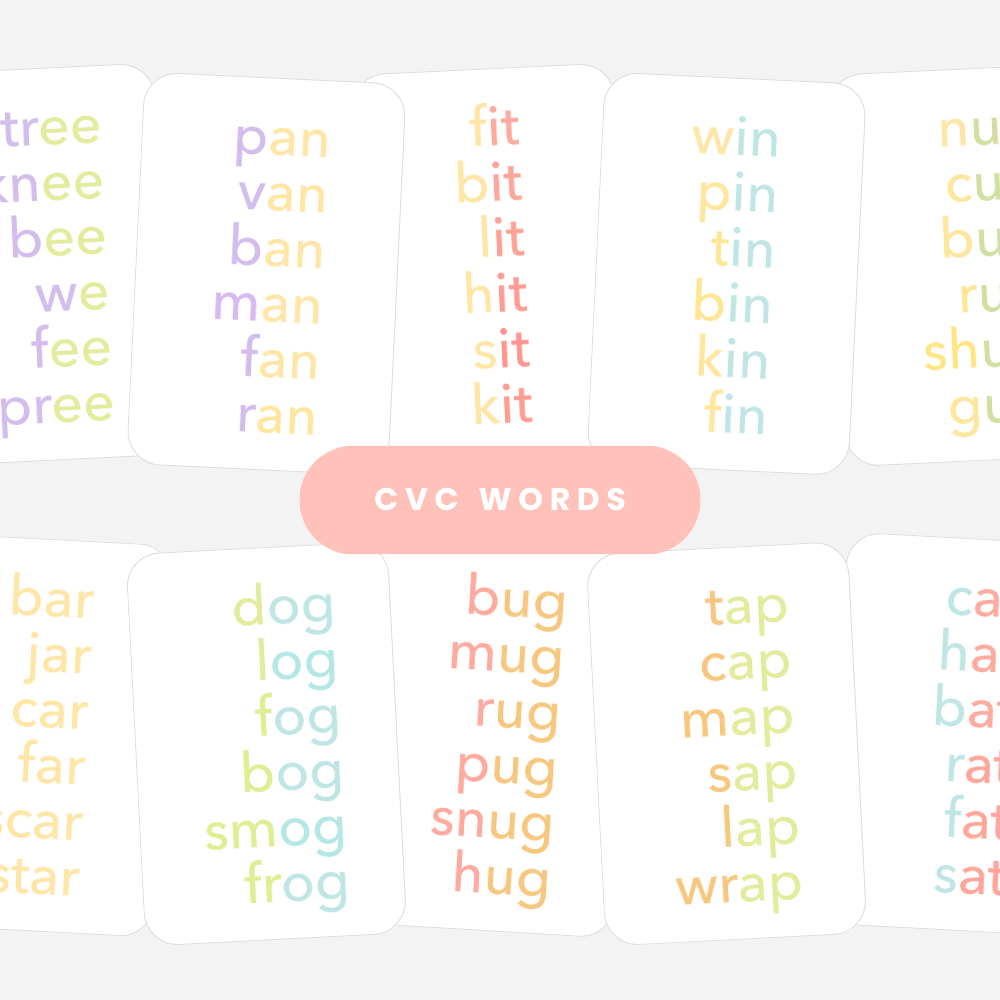
Explore Letter Sounds Flashcards →CVC WORDS
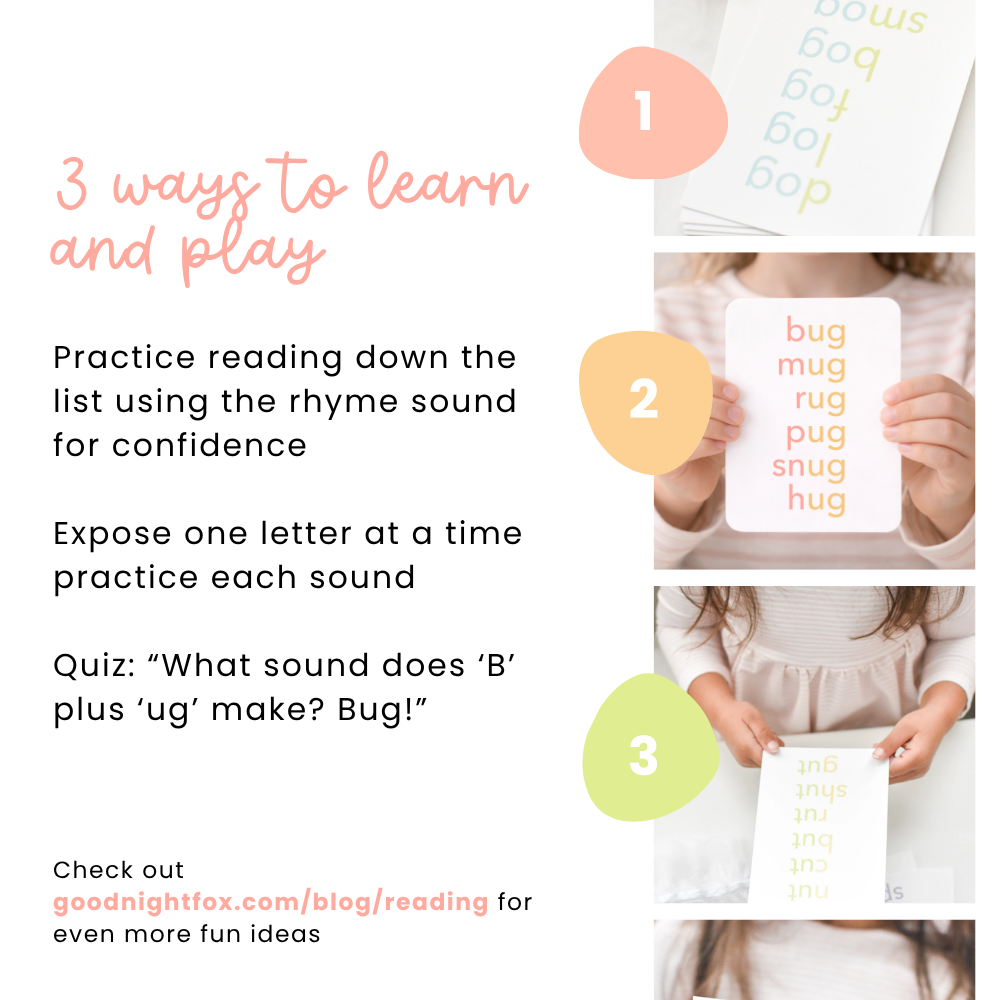
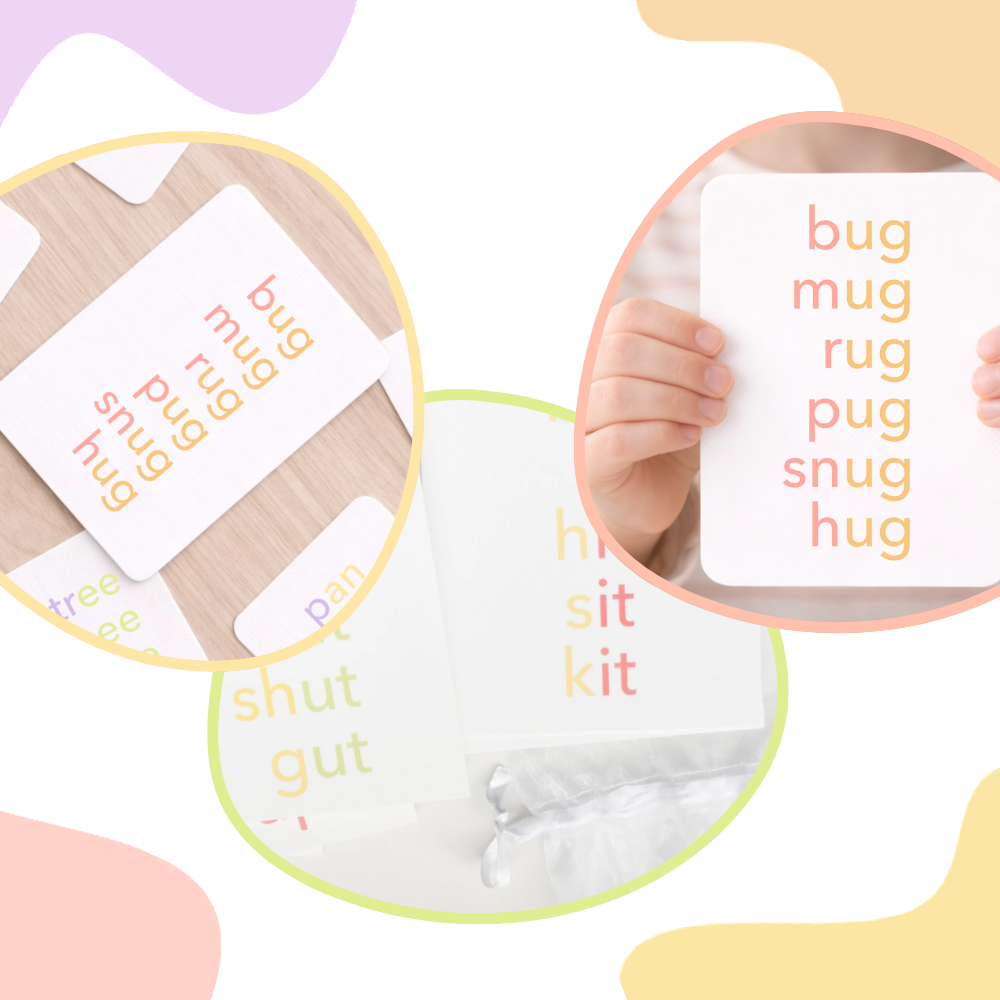
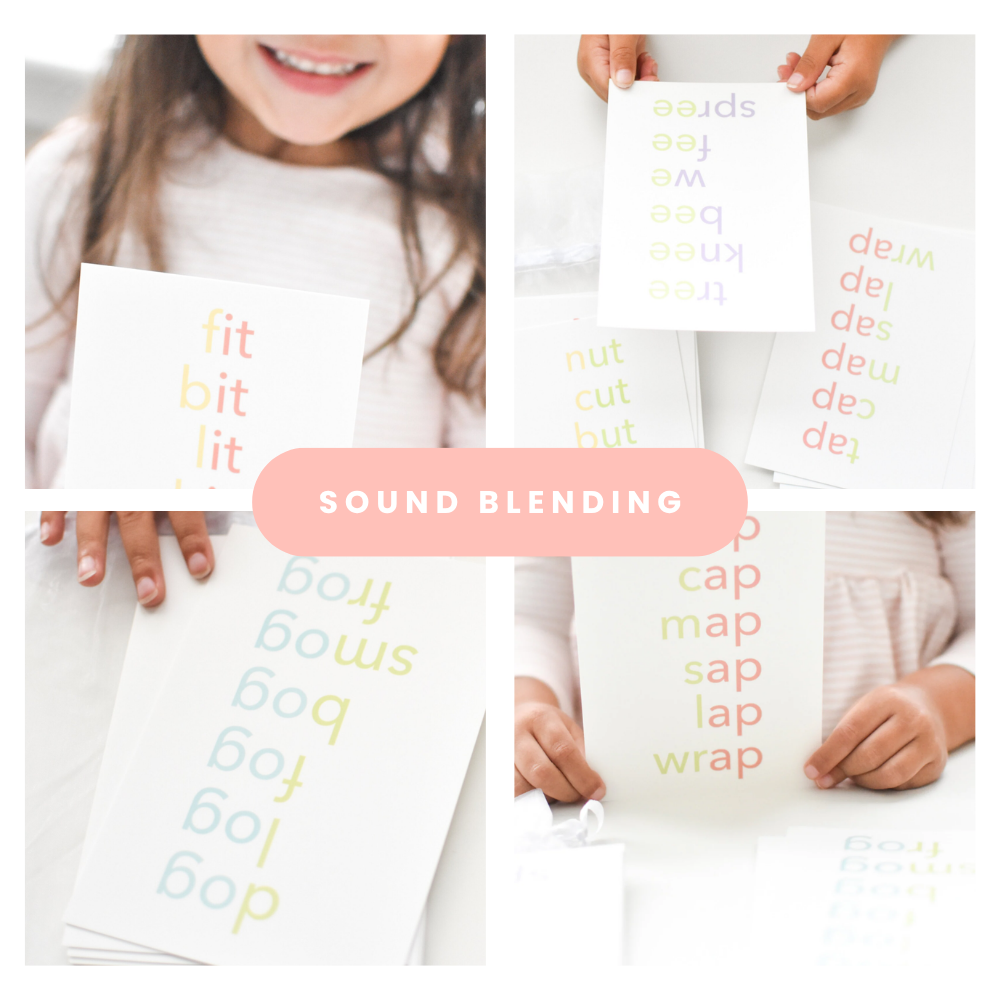
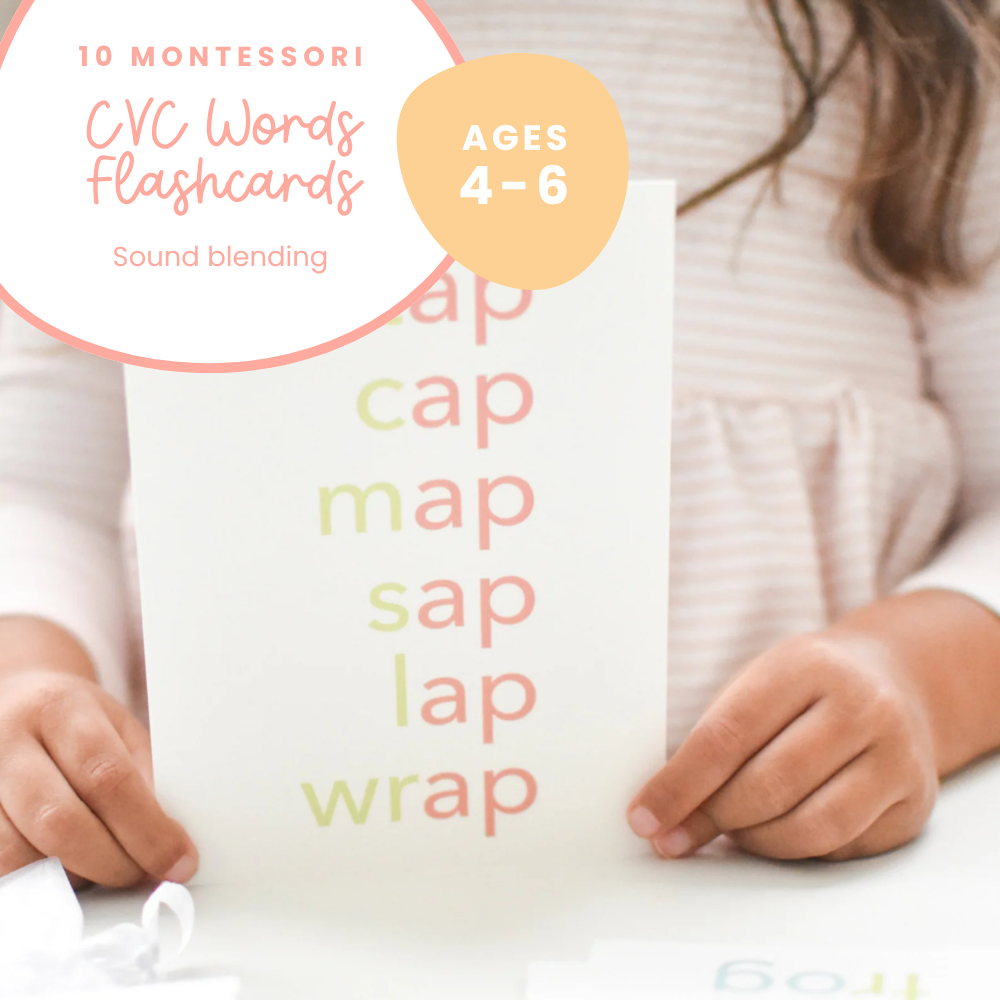
Sound Blending
Approximately ages 4–6
Children combine individual letter sounds to read short words such as cat, dog, sun and pig.
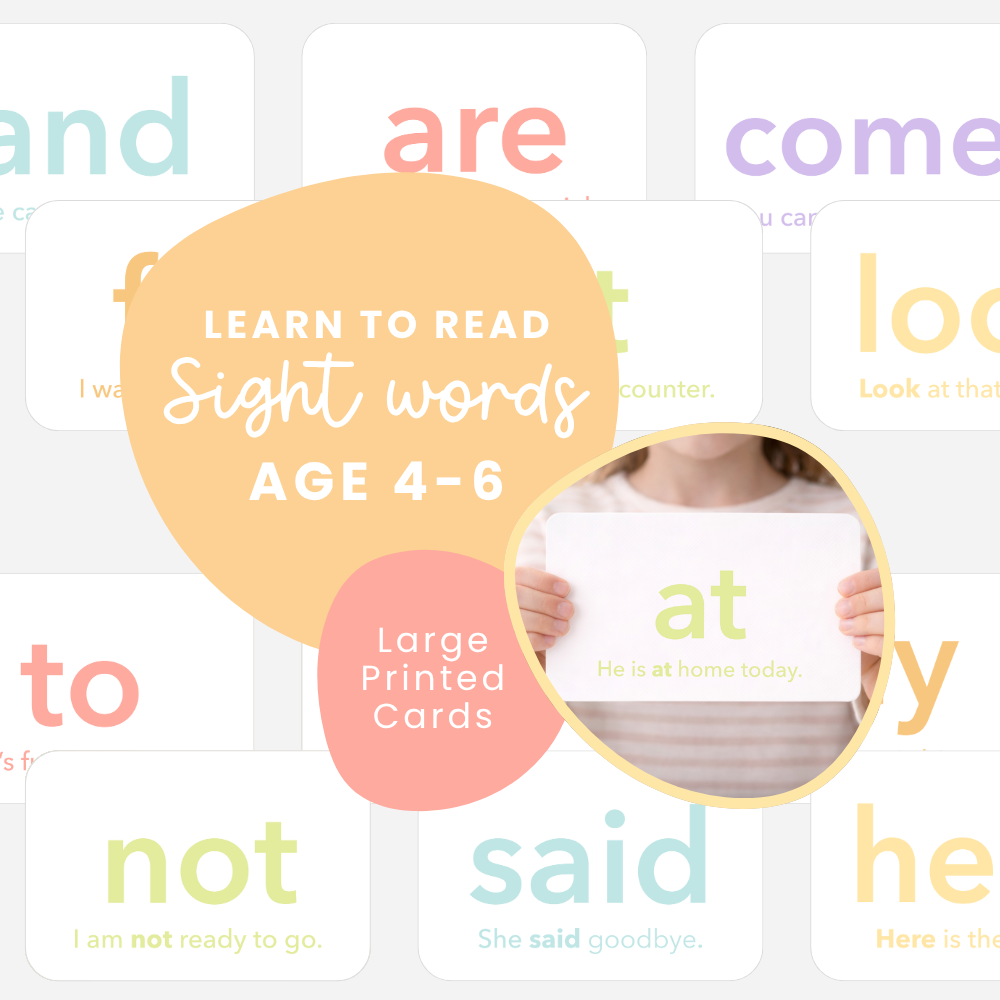
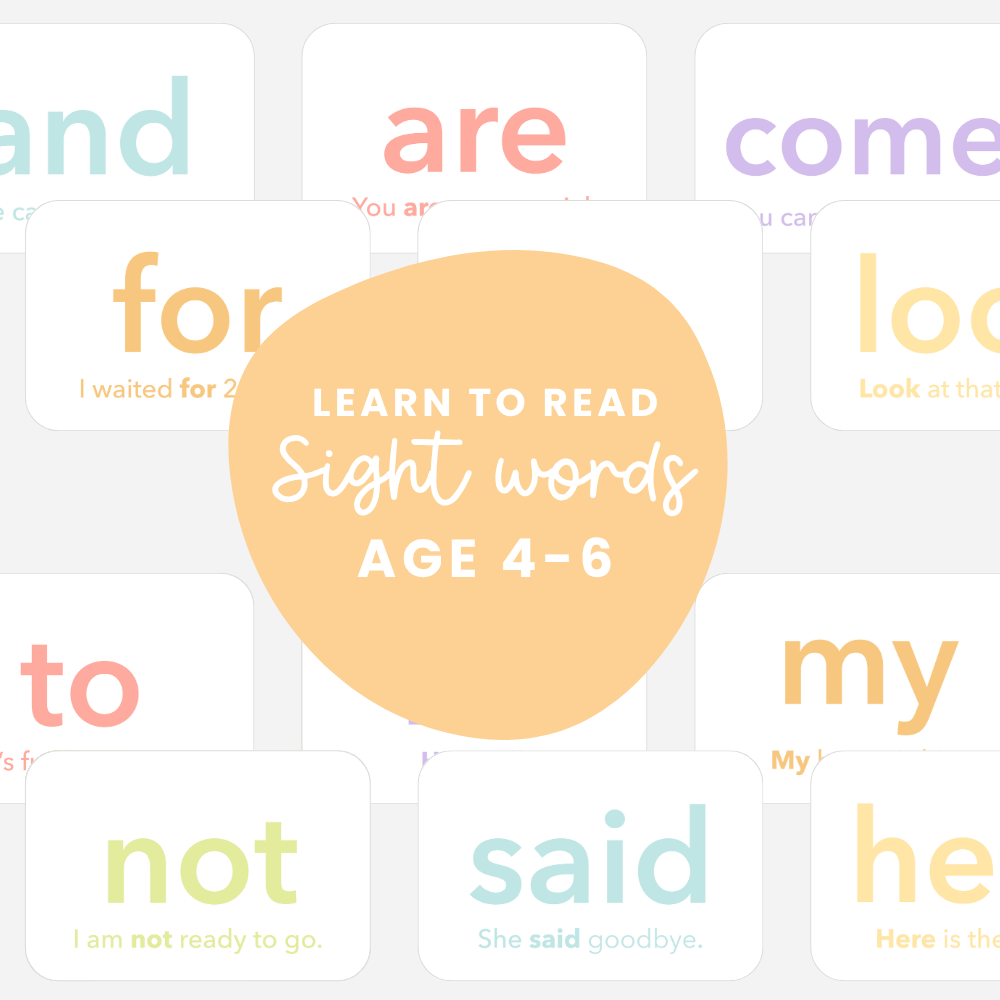
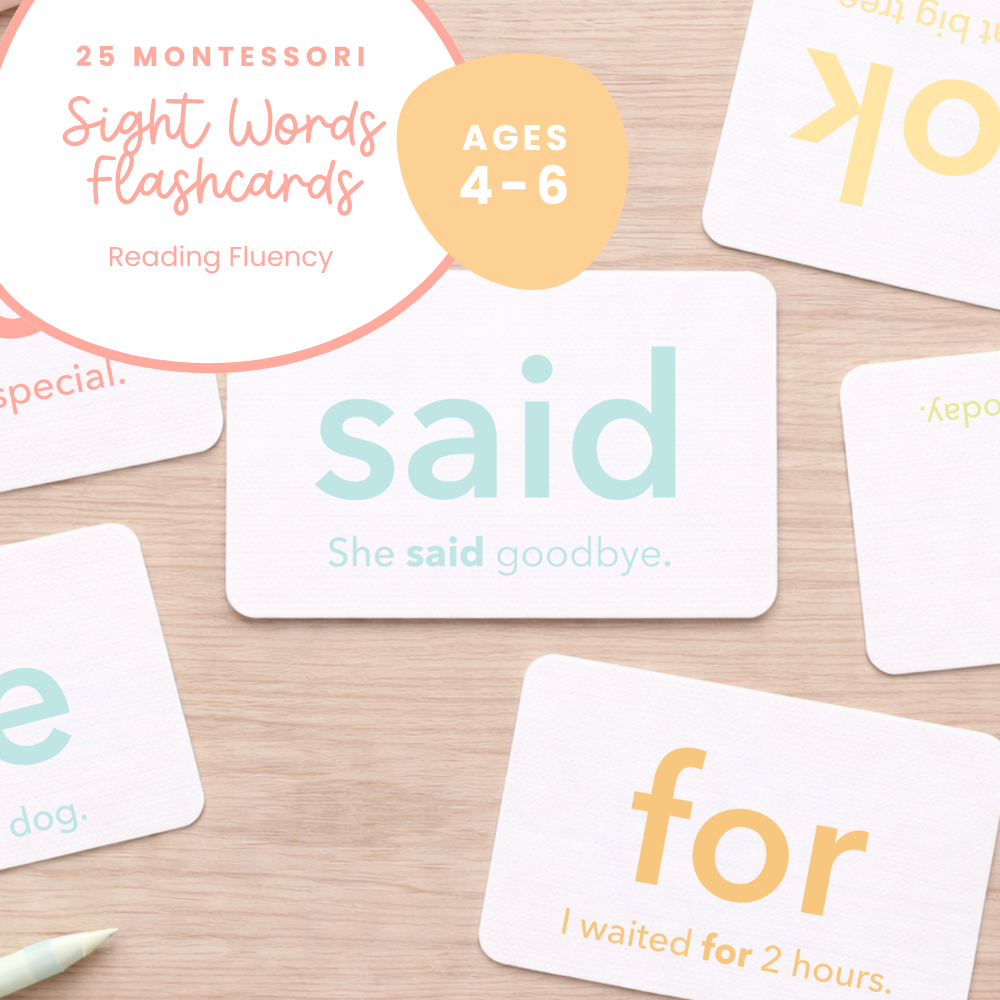
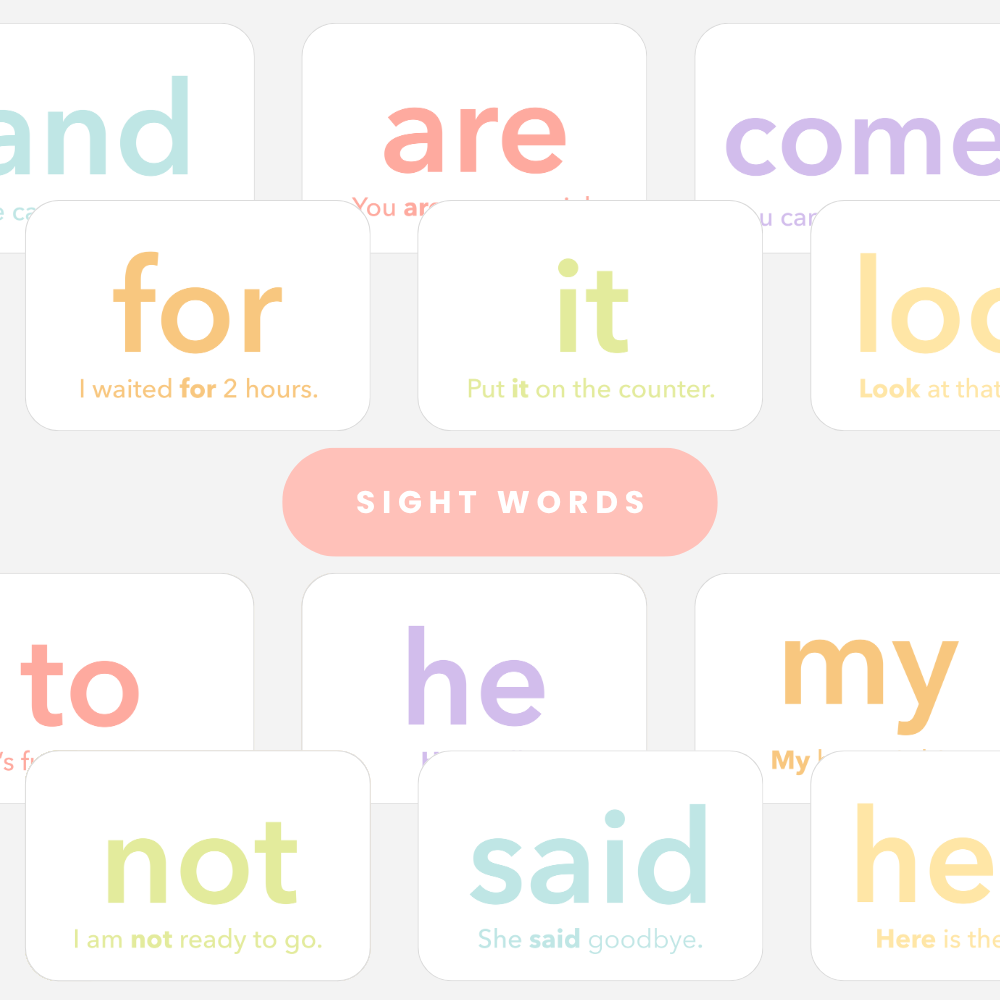
Explore the Reading Bundle →SIGHT WORDS
Reading Fluency
Approximately ages 4–6
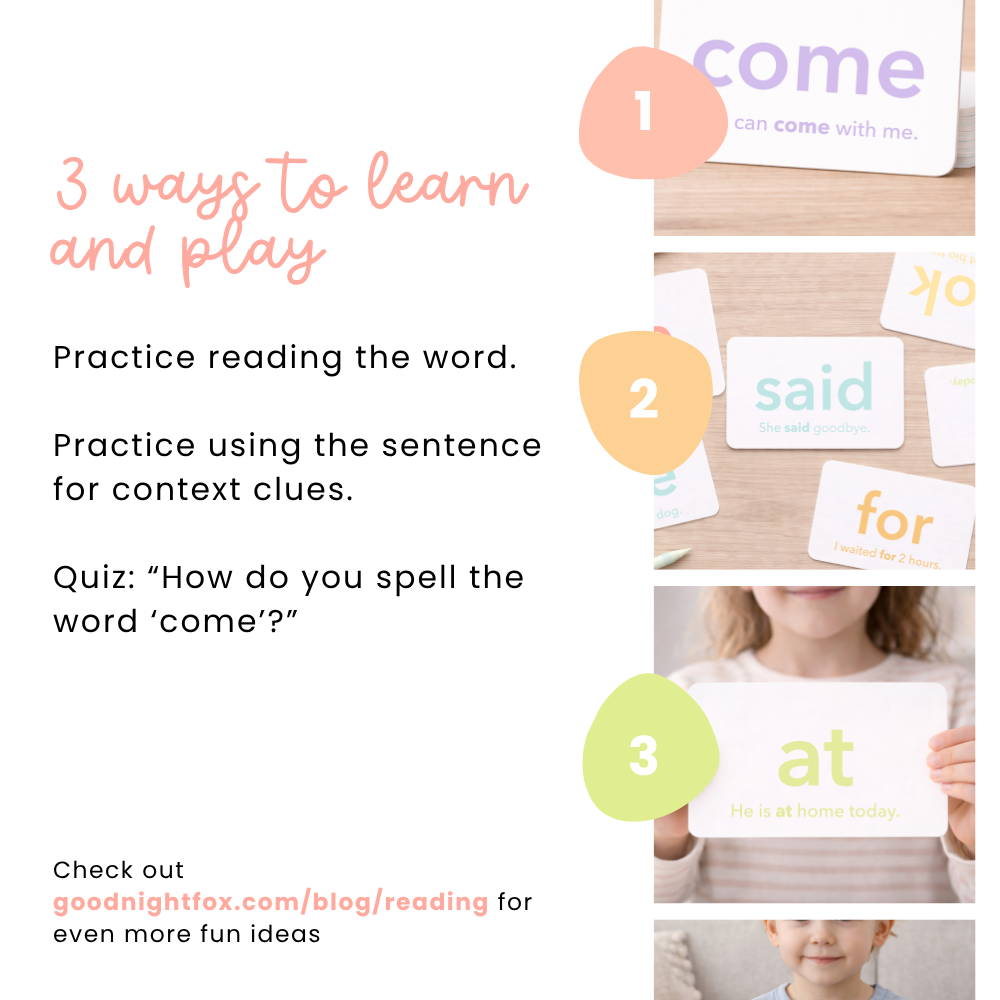
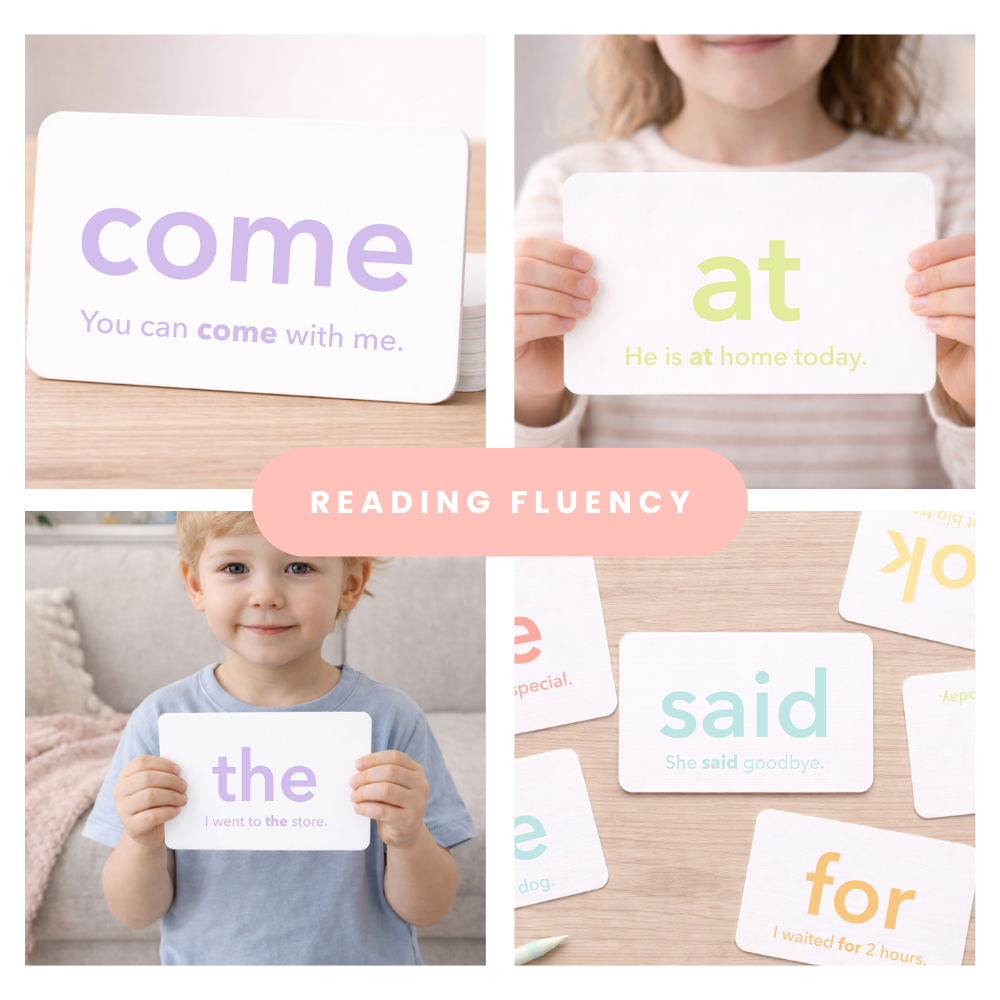
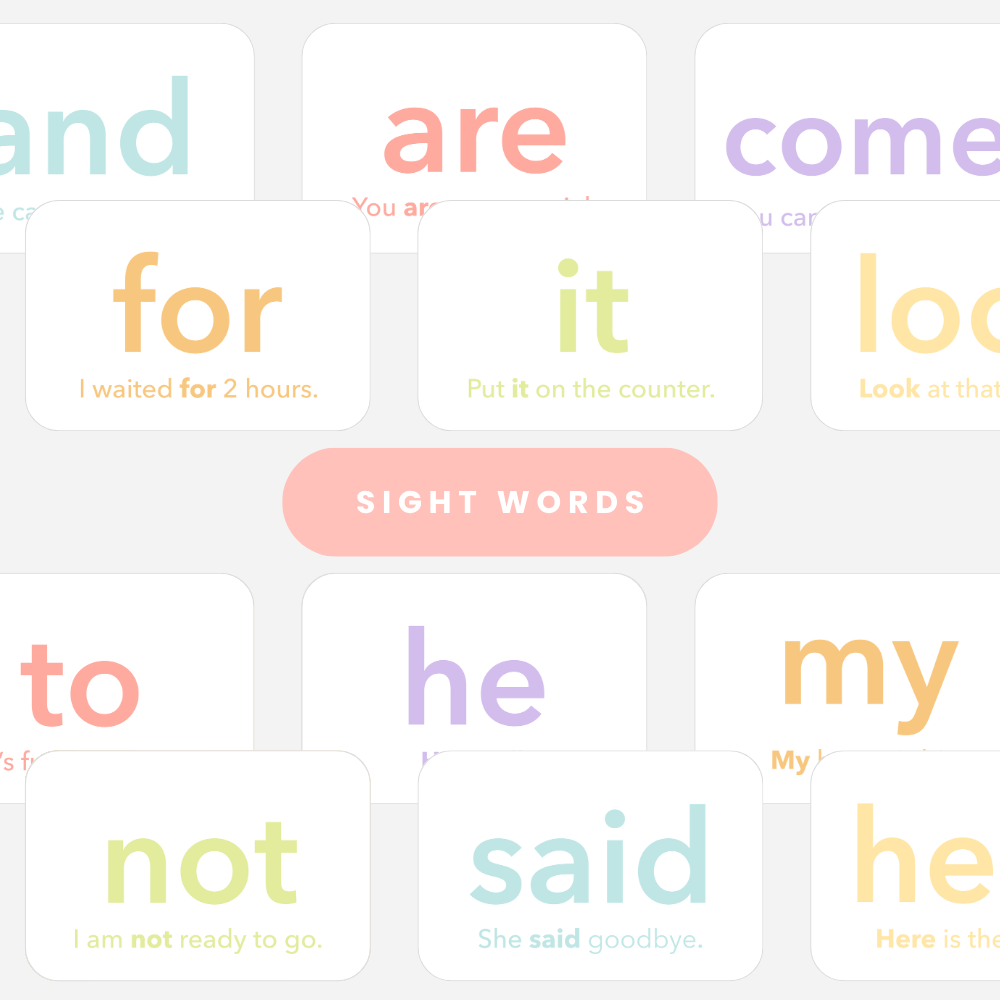
Children build automatic recognition of frequently encountered words while continuing to use phonics to decode unfamiliar words.
Explore the Reading Bundle →Skills That Connect the Stages
Digraphs
Letter pairs such as sh, ch, th and wh help children move beyond one-letter, one-sound patterns.
Rhyming Words
Hearing shared endings and sound patterns supports phonological awareness and prepares children to recognize word families.
WHERE SHOULD WE BEGIN?
Start With the Skill Your Child Is Exploring Today
These age ranges and stages are flexible guides—not deadlines. Children may move back and forth between skills or work on several at the same time.
START SMALL
A Simple Five-Minute Phonics Routine
Choose One Sound
Introduce one primary sound and keep the explanation short.
“This is B. B makes the /b/ sound, like ball.”
Find Something Familiar
Connect the sound to your child’s name, a favorite animal, toy or food.
Add Movement or Touch
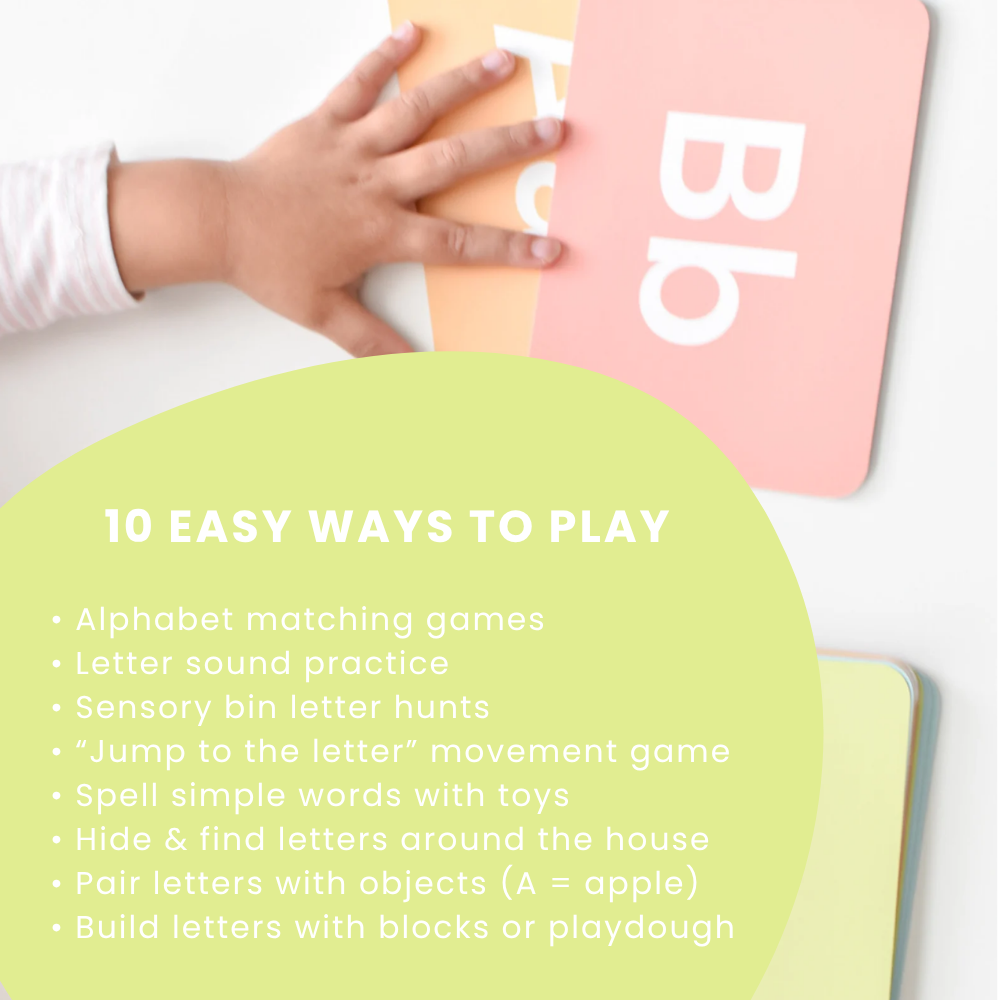
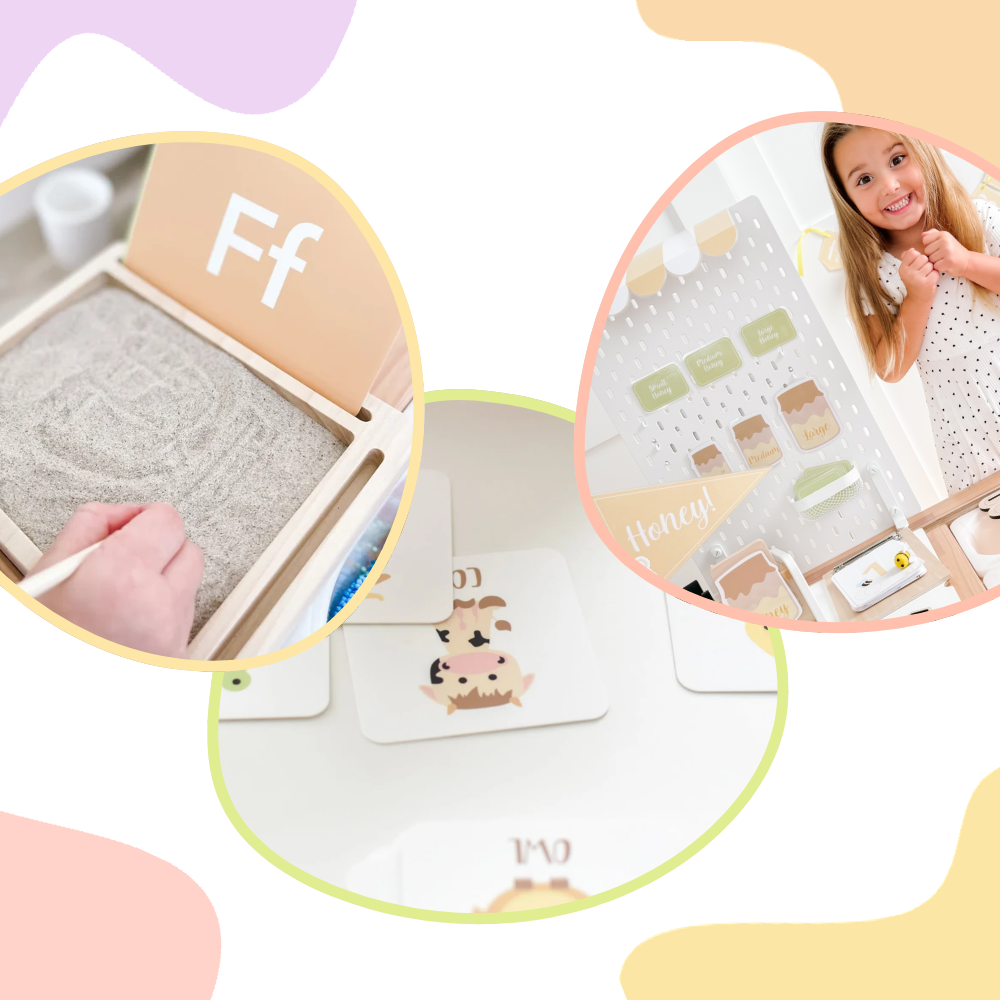
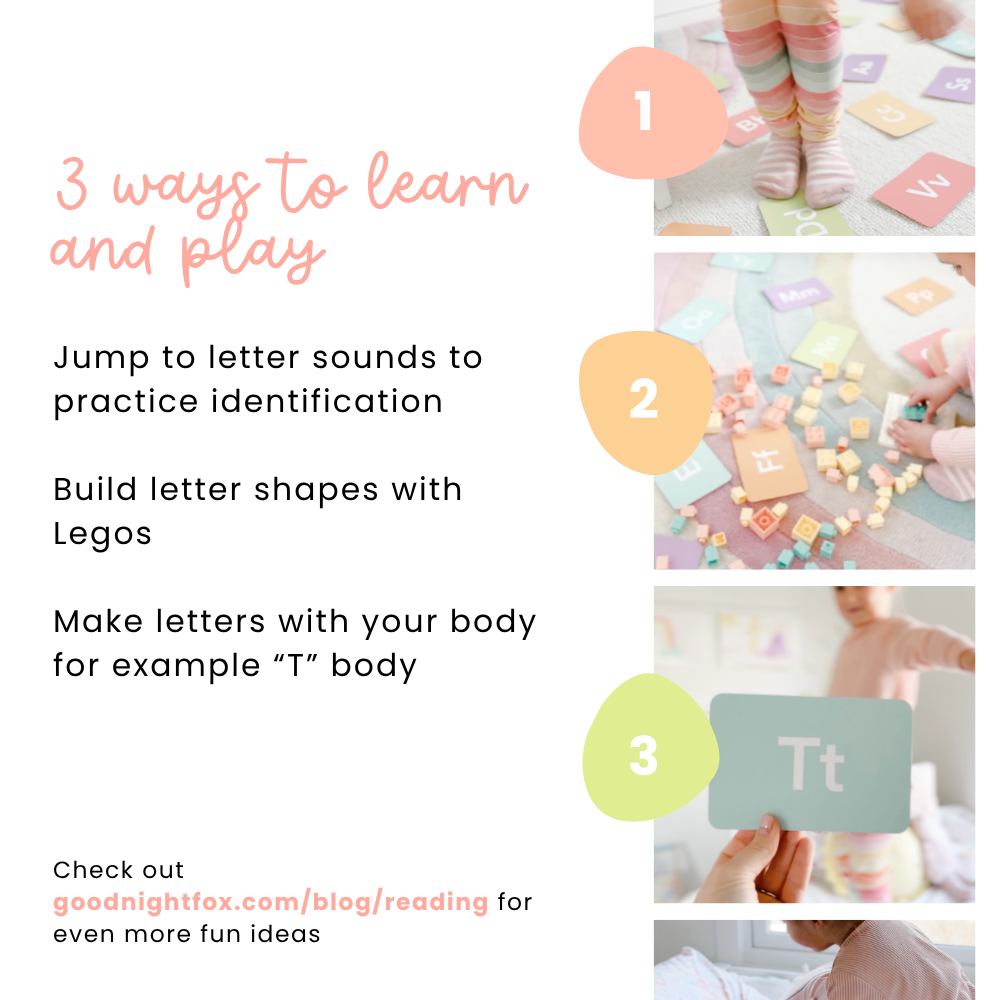
Trace the letter, build it with dough, hop to it or hide its card in a sensory bin.
Notice It in a Book
Point out the sound naturally in a title, character name or familiar word.
Stop While It Is Still Fun
End after a few successful repetitions rather than continuing until your child is frustrated.
LEARNING THROUGH PLAY
Flashcards Do Not Have to Feel Like a Quiz
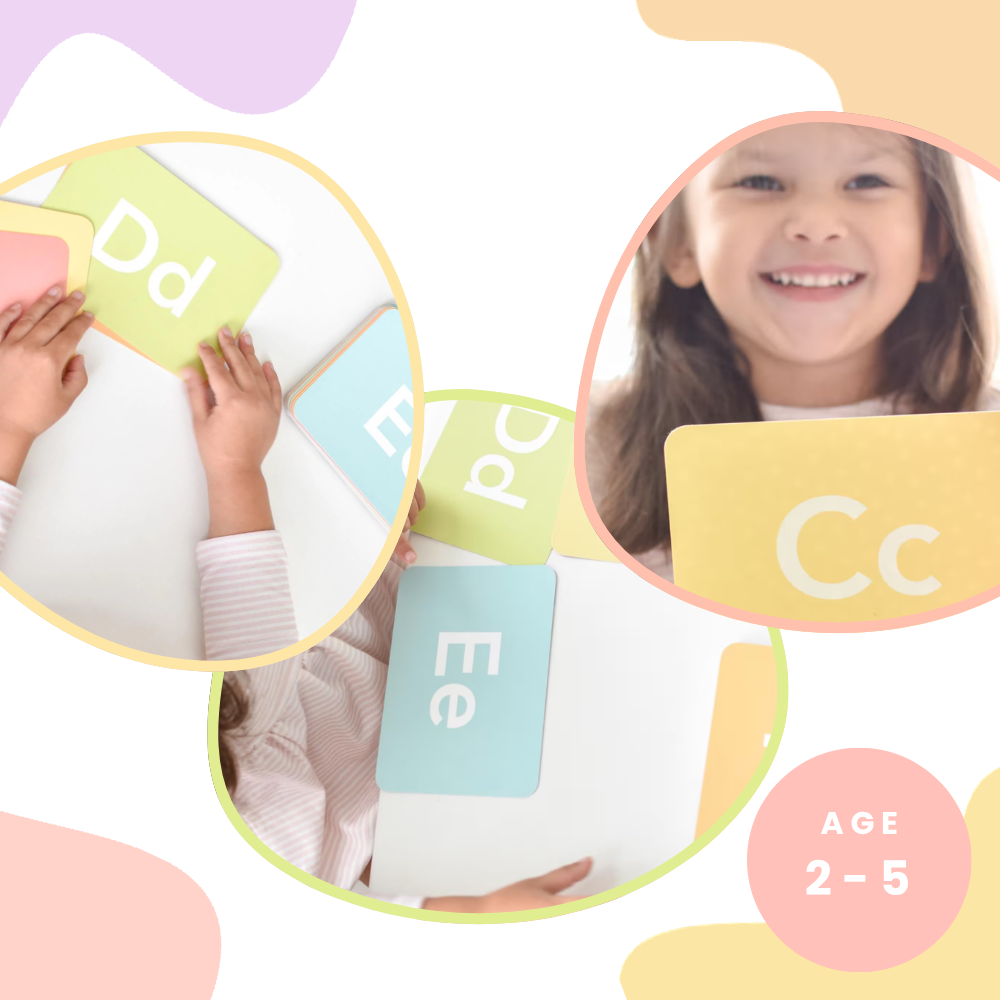
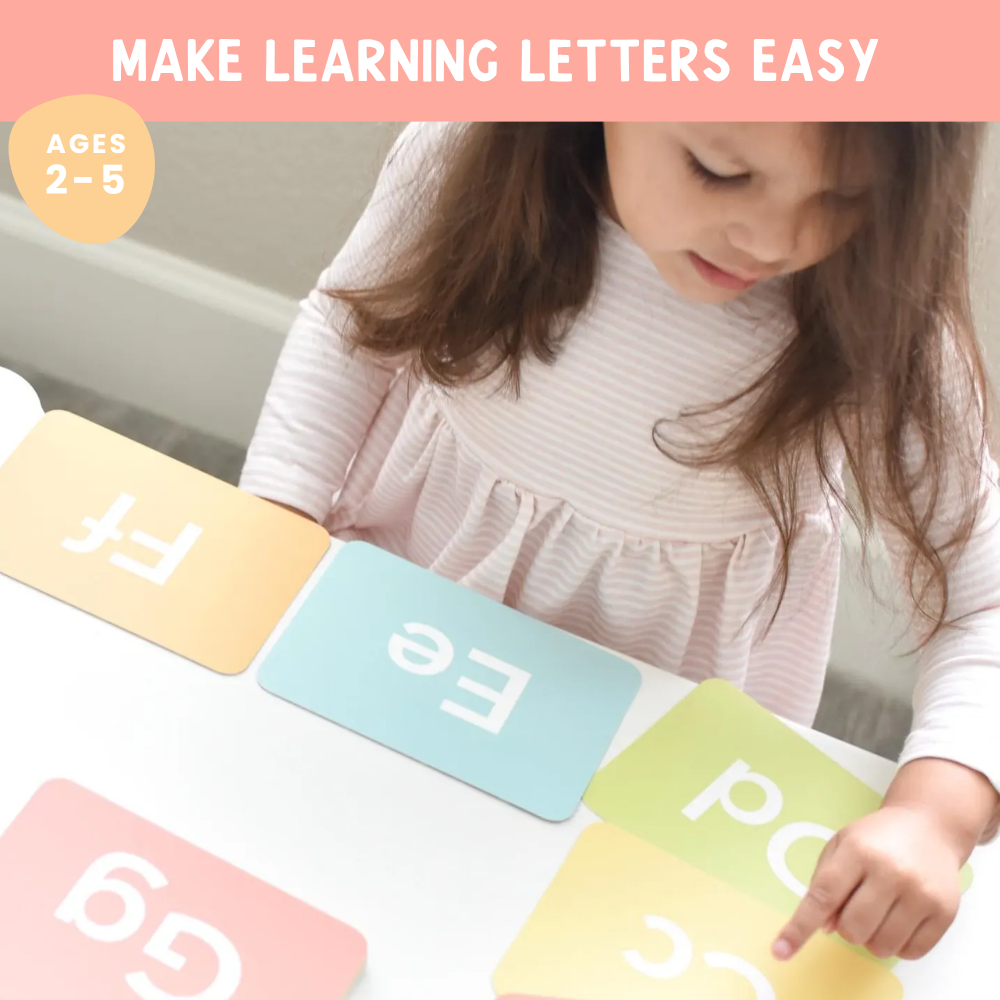
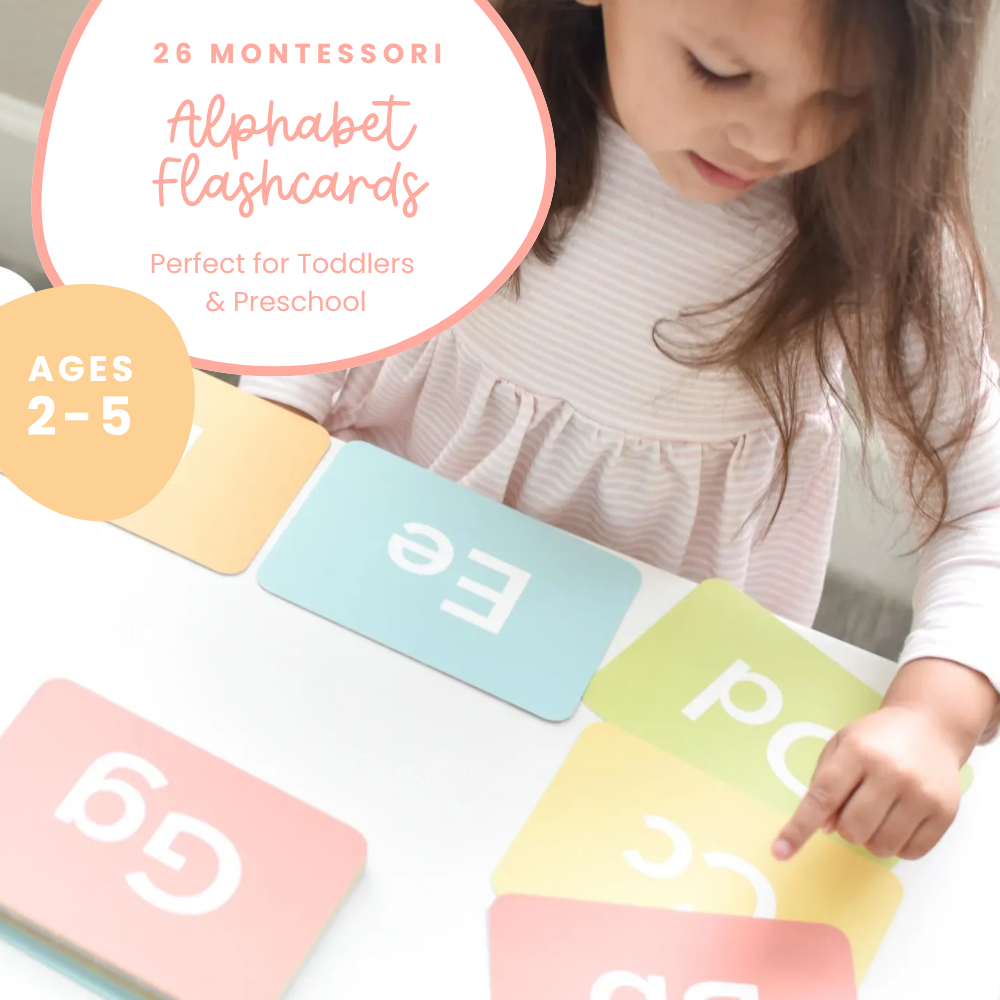
The cards are most effective when they become part of a game, sensory invitation, movement activity or conversation—not when a child is asked to sit through an entire stack.
LATER IN THE JOURNEY
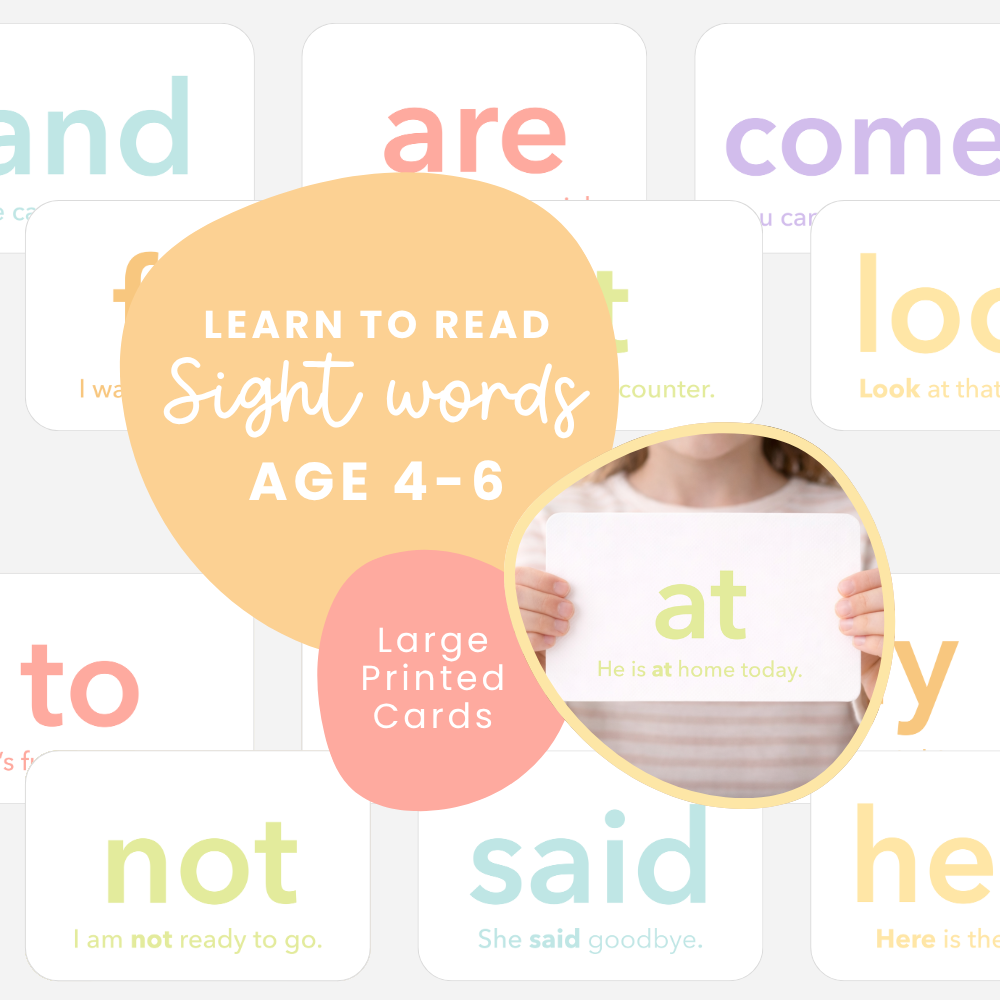
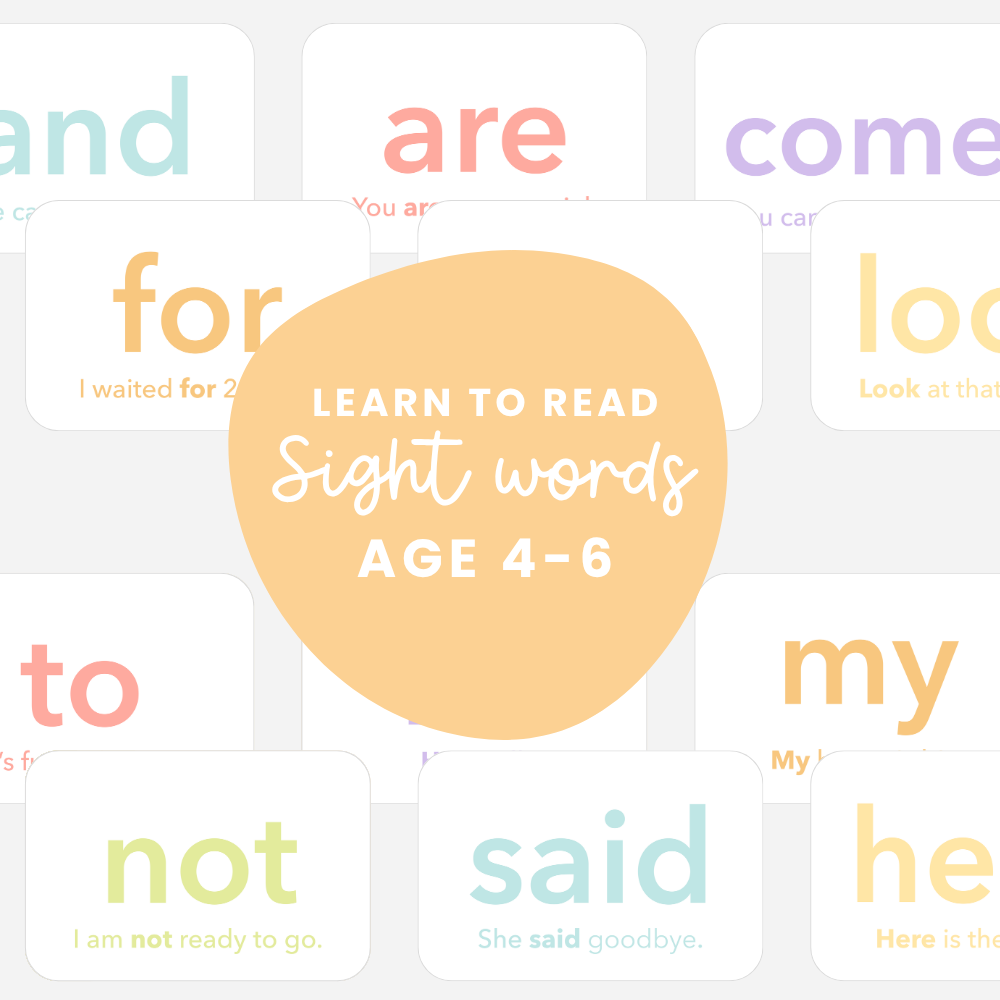
Adding Sight Words Without Abandoning Phonics
Sight-word practice should support phonics rather than replace it. Children can learn to recognize frequently encountered words while still sounding out unfamiliar words and studying how letters work together.

THE COMPLETE HANDS-ON SYSTEM
Support Every Step of Their Early Reading Journey
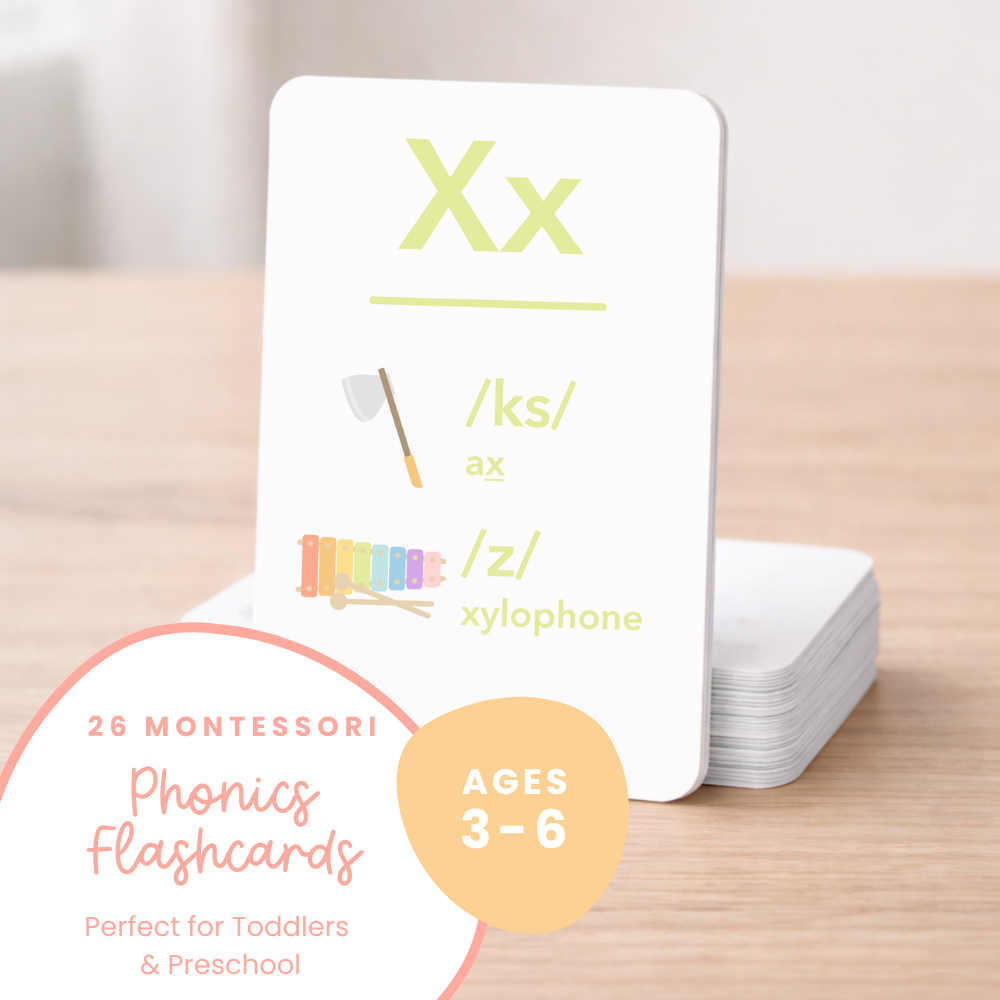
The free cheat sheet gives you a reference for teaching letter sounds. The physical Reading Flashcards Bundle gives your child coordinated, reusable tools for practicing the skills that come before and after phonics.
- Physical, professionally printed flashcards
- Designed for early learners approximately ages 3–6
- Use in sensory bins, morning baskets and homeschool preschool
- Supports multiple stages of the reading journey
A CALMER WAY TO PRACTICE
Common Questions From Parents
“My child will not sit for flashcards.”
They do not need to. Hide cards, spread them across the floor, use only two at a time or combine them with movement and sensory play.
“I am worried I will teach the sounds incorrectly.”
Keep the free phonics cheat sheet nearby and begin with the primary sound shown.
“My child knows the alphabet but is not reading.”
Letter recognition is one stage. Continue building sound awareness, blending, rhyme and word-pattern knowledge.
“We already own alphabet cards.”
The Reading Bundle supports the skills that come after basic alphabet recognition, including phonics, digraphs, rhyme and sight words.
NOT READY FOR THE BUNDLE?
Start With One Sound Today
Download the free reference, practice for a few playful minutes and return to the Reading Journey whenever you are unsure what comes next.
Keep the phonics fun going
Ready for the next step? These pair perfectly with the activities above:
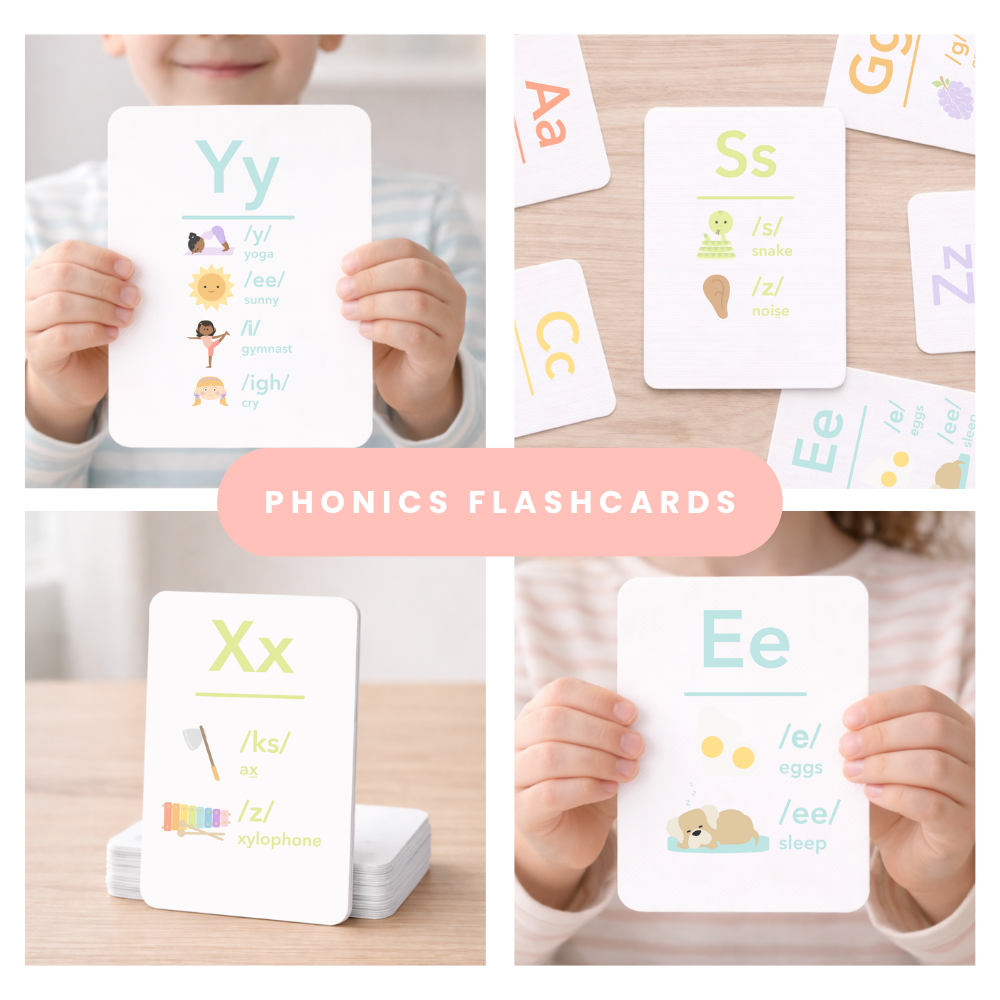
- Letter Sounds Phonics Flashcards — pair every letter with its sound and a playful picture cue
- Magnetic Letter Board Blending — build and blend simple words, hands-on
- 14+ Alphabet Sensory Activities — letter recognition through sensory bins and trays
- Why Picture Alphabets Work — how animal pictures give kids a hook for each letter sound
PHONICS FAQ
PHONICS FAQ
Questions Parents Commonly Ask
What age should I begin teaching phonics?
Many children begin noticing letters and sounds during the preschool years. Follow your child’s interest and keep practice playful and pressure-free.
Should I teach letter names or sounds first?
Children can learn both. The name identifies the letter symbol, while the sound explains how the letter functions inside words.
Which sound should I teach first?
Begin with a common, easy-to-hear sound. Use the phonics cheat sheet as a practical reference for primary and secondary sounds.
How long should phonics practice last?
Three to five focused minutes can be plenty for a young child. Stop before the activity becomes frustrating.
Does my child need to learn letters alphabetically?
No. You can begin with the letters in your child’s name, follow their interests or use a structured progression.
Are sight words a replacement for phonics?
No. Sight words can be practiced alongside phonics, but children still need to learn how letters and sounds work together.
What are digraphs?
Digraphs are two letters that work together to represent one sound, such as sh, ch and th.
When should we begin CVC words?
Begin simple blending once your child knows several common letter sounds and can hear individual sounds inside short words.
Are the Reading Bundle cards physical or printable?
The primary Reading Flashcards Bundle is a physical product. A separate printable version is also available.
START WHERE YOU ARE
One Sound Today Can Become One Word Tomorrow
Begin with the free parent reference. Practice for a few playful minutes. When your child is ready for the next stage, use the Reading Bundle to continue building.
Teaching your toddler letter sounds shouldn’t feel overwhelming… but for many parents, it does.
If you’ve ever sat down to teach the alphabet and thought:
“Why does letter A make so many sounds?”
“What do I actually teach first?”
“Am I doing this right?”
You’re not alone — and that’s exactly why I created a super simple Phonics Cheat Sheet that breaks everything down in a clear, visual way.
Before you dive in, grab the FREE printable phonics cheat sheet below — it’s the perfect quick-reference guide for teaching letter sounds the stress-free way.
Why Phonics Matters for Toddlers
Phonics is the foundation of early reading. When toddlers learn letter sounds, they’re building:
Early decoding skills
Sound awareness (phonemic awareness)
Confidence with letters
The ability to blend sounds later
This is one of the biggest predictors of future reading success — and starting early (in a playful, low-pressure way!) makes all the difference.
The Problem Most Parents Run Into
Letters don’t just make one sound.
For example:
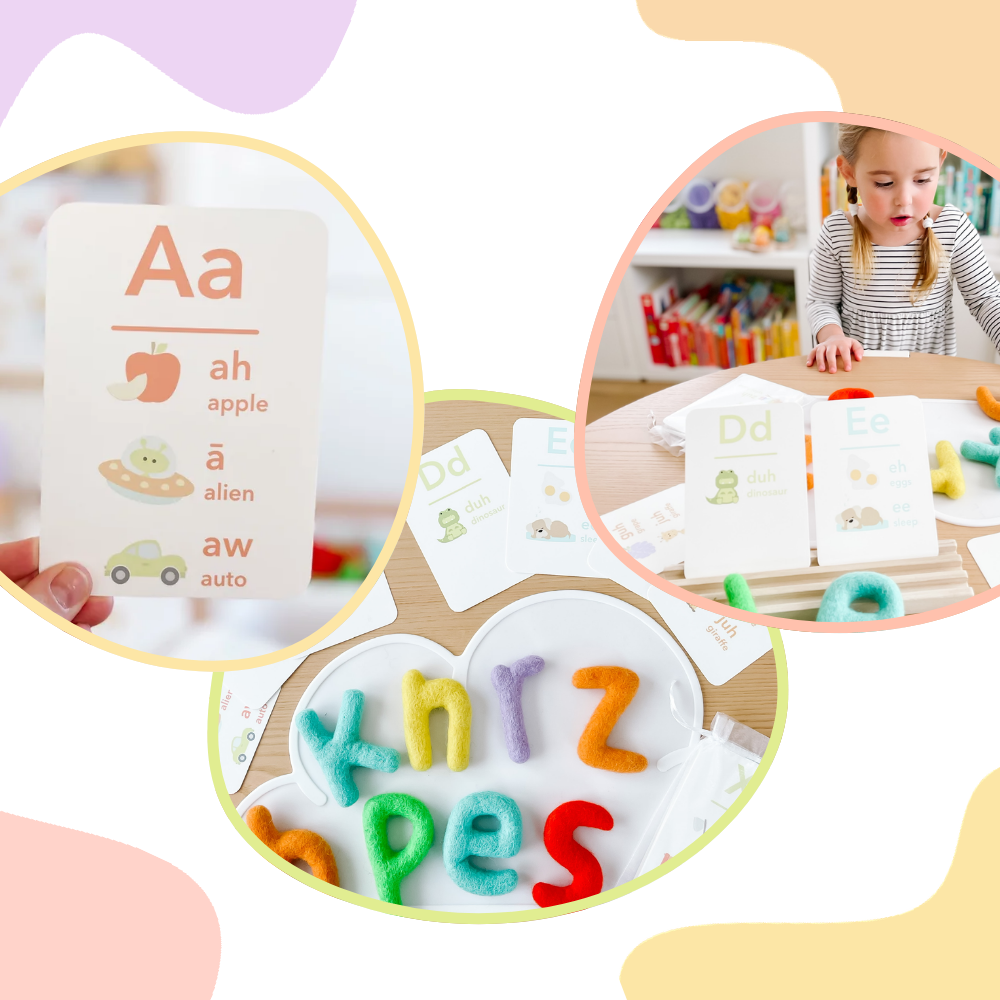
A → /a/ /ā/ /ah/
C → /k/ /s/
G → /g/ /j/
It’s no wonder parents feel unsure about teaching phonics at home.
That’s why I designed the Phonics Cheat Sheet — it lists every common letter sound in a toddler-friendly format that matches how you’ll teach them in preschool and kindergarten.
💡 Pro Tip: Keep the cheat sheet on your fridge or in your homeschool binder for quick reference during activities.
How to Teach Letter Sounds (The Easy Way)
1. Start with the most common sound
Each letter has multiple sounds, but toddlers should begin with the one they’ll use most often. The free cheat sheet highlights these clearly.
2. Use real objects and sensory play
Examples:
Hide objects that begin with /b/ in a sensory bin
Make letter-sound “scooping” stations
Use playdough to form letters while saying the sound
3. Keep practice short and playful
Think: 3–5 minutes of focused phonics paired with hands-on fun.
4. Repeat sounds often and casually
Point out letter sounds while cooking, driving, reading — the more repeated exposure, the better.
Free Phonics Cheat Sheet (Must-Have for Toddler Learning!)
This printable includes:
The most common sound for every letter
Secondary sounds parents often forget
A toddler-friendly layout that builds confidence
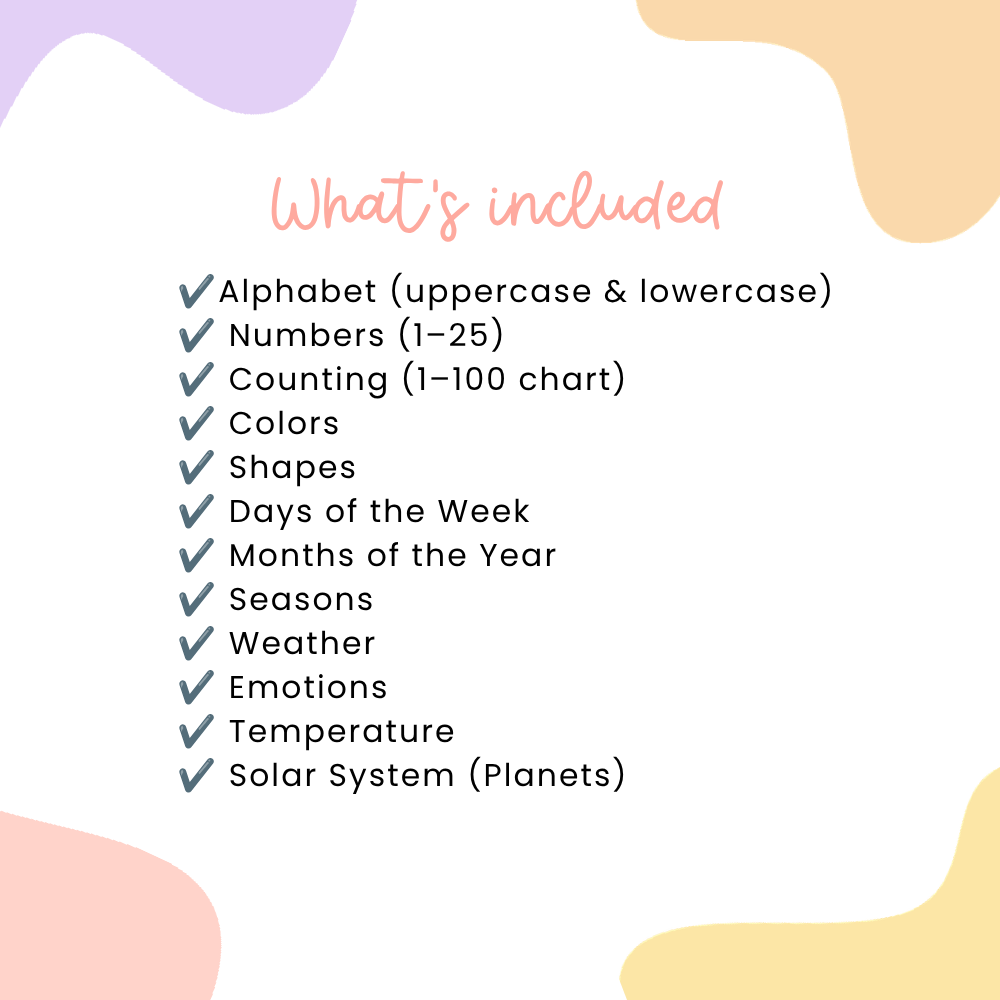
Beautiful pastel illustrations that make learning feel fun
A quick-reference tool you can use with ANY activity
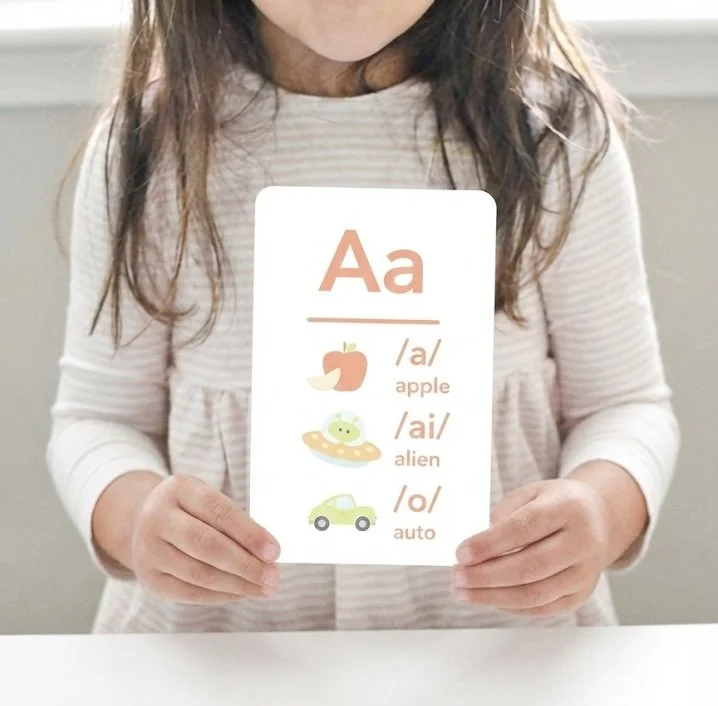
Want to Take Phonics Further? Try the Letter Sounds Flashcards
If your toddler loves hands-on learning, my Letter Sounds Flashcards are the perfect companion to the cheat sheet. They help toddlers:
Practice sounds through play
Match objects to beginning sounds
Build fine motor skills through sorting, matching, and sensory play
Gain confidence before preschool or kindergarten
Parents tell me all the time how these cards completely transformed their reading routine — making it something their child asks to do.
✨ After downloading the cheat sheet, keep an eye on your inbox.
I’ll send you a few playful phonics activities + an exclusive discount on the physical flashcards.
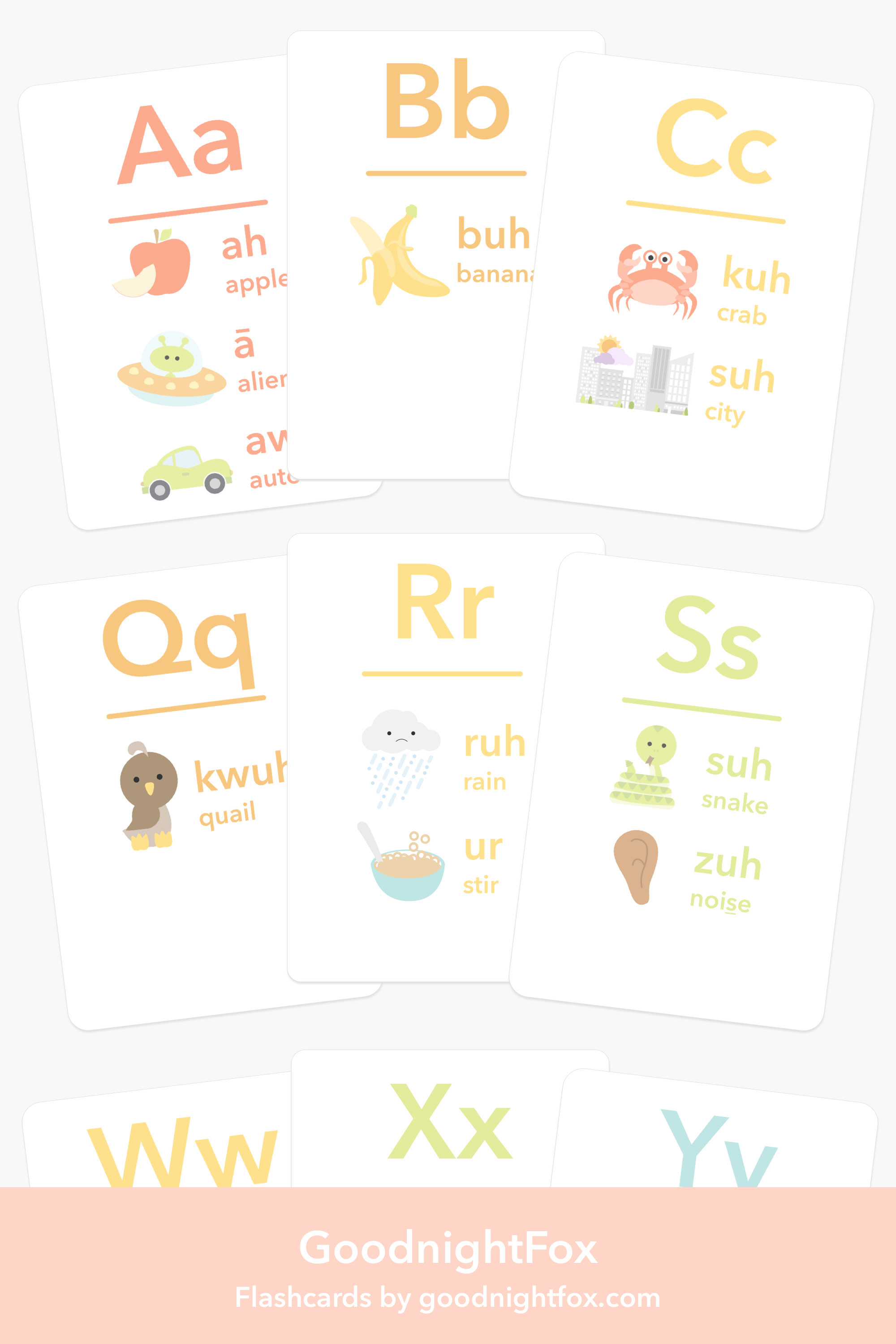


Playful Ways to Practice Phonics at Home
Here are easy, low-prep ideas that work with the cheat sheet and flashcards:
Sensory sound hunt — hide cards or objects that begin with the same sound in a sensory bin
Letter sorting tray — match picture cards to their beginning letter
Sound hop — place letters on the floor and let your toddler hop to the sound you call
Mini sound stations — set up 3 baskets labeled with letters and let your toddler sort objects
These are the kinds of activities that make learning feel like PLAY — and get those little neurons firing.
Ready to Make Phonics Simple?
Download your free cheat sheet below and start feeling confident teaching letter sounds — in minutes.